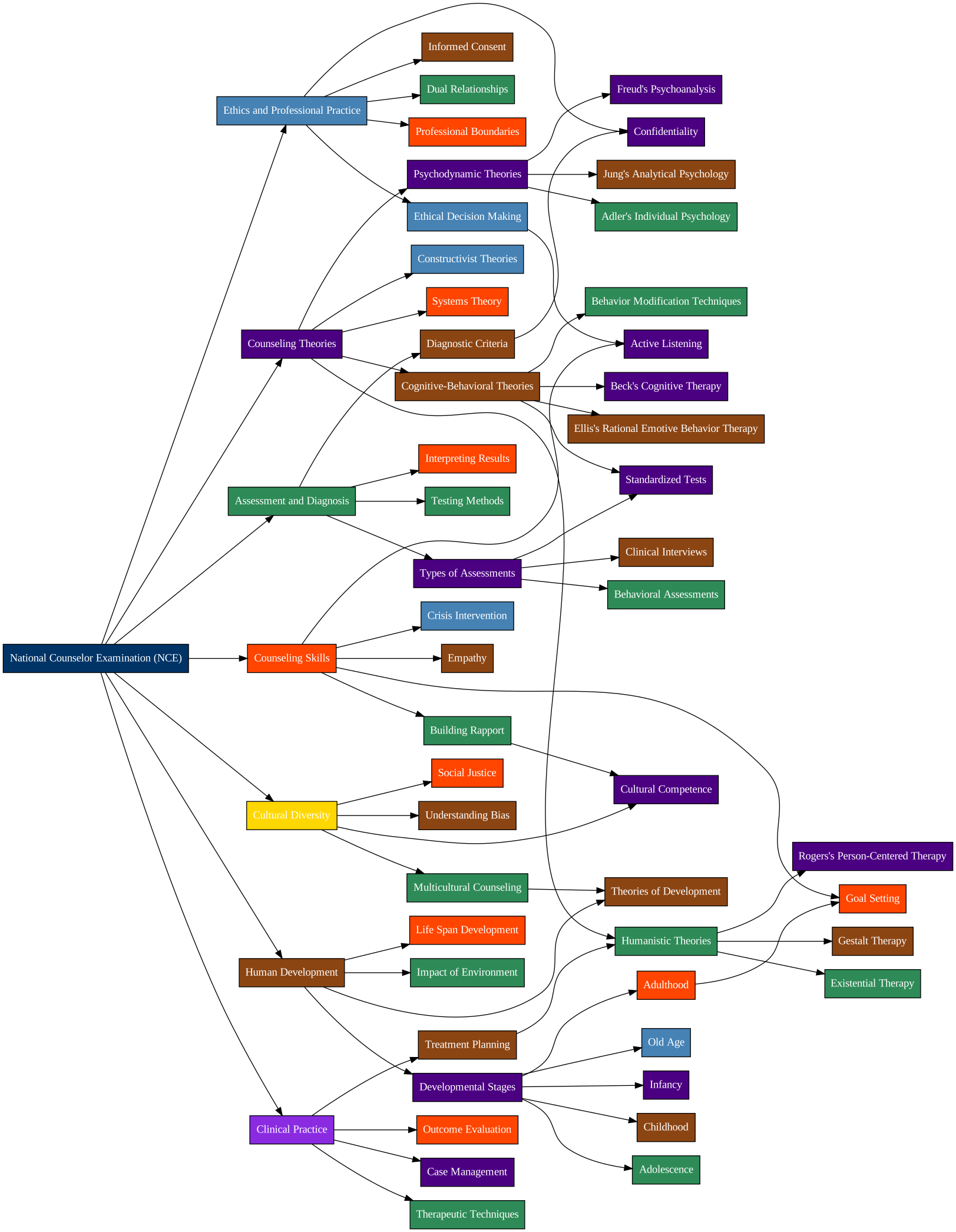
Quiz-summary
0 of 30 questions completed
Questions:
- 1
- 2
- 3
- 4
- 5
- 6
- 7
- 8
- 9
- 10
- 11
- 12
- 13
- 14
- 15
- 16
- 17
- 18
- 19
- 20
- 21
- 22
- 23
- 24
- 25
- 26
- 27
- 28
- 29
- 30
Information
Premium Practice Questions
You have already completed the quiz before. Hence you can not start it again.
Quiz is loading...
You must sign in or sign up to start the quiz.
You have to finish following quiz, to start this quiz:
Results
0 of 30 questions answered correctly
Your time:
Time has elapsed
You have reached 0 of 0 points, (0)
Categories
- Not categorized 0%
- 1
- 2
- 3
- 4
- 5
- 6
- 7
- 8
- 9
- 10
- 11
- 12
- 13
- 14
- 15
- 16
- 17
- 18
- 19
- 20
- 21
- 22
- 23
- 24
- 25
- 26
- 27
- 28
- 29
- 30
- Answered
- Review
-
Question 1 of 30
1. Question
In the context of mentoring adults, how does continuing professional development (CPD) contribute to the effectiveness of a mentor? Consider a scenario where a mentor dedicates time to various CPD activities throughout the year. If they attend 4 workshops, each lasting 3 hours, how many total hours do they invest in their professional development? Additionally, discuss the implications of this investment on their mentoring practice and the potential benefits for their mentees.
Correct
Continuing professional development (CPD) is essential for mentors to enhance their skills and adapt to the evolving needs of their mentees. A mentor’s effectiveness can be significantly improved through various CPD activities, such as attending workshops, engaging in peer discussions, or pursuing further education. For instance, if a mentor participates in a workshop that lasts 3 hours and they attend 4 such workshops in a year, the total hours spent on CPD would be calculated as follows: Total CPD hours = Number of workshops × Hours per workshop Total CPD hours = 4 workshops × 3 hours/workshop = 12 hours This calculation illustrates the commitment a mentor can make to their professional growth. Engaging in CPD not only benefits the mentor but also enhances the mentoring relationship, as it equips the mentor with updated knowledge and skills that can be shared with mentees. Therefore, the total CPD hours a mentor dedicates annually can serve as a benchmark for their professional development efforts.
Incorrect
Continuing professional development (CPD) is essential for mentors to enhance their skills and adapt to the evolving needs of their mentees. A mentor’s effectiveness can be significantly improved through various CPD activities, such as attending workshops, engaging in peer discussions, or pursuing further education. For instance, if a mentor participates in a workshop that lasts 3 hours and they attend 4 such workshops in a year, the total hours spent on CPD would be calculated as follows: Total CPD hours = Number of workshops × Hours per workshop Total CPD hours = 4 workshops × 3 hours/workshop = 12 hours This calculation illustrates the commitment a mentor can make to their professional growth. Engaging in CPD not only benefits the mentor but also enhances the mentoring relationship, as it equips the mentor with updated knowledge and skills that can be shared with mentees. Therefore, the total CPD hours a mentor dedicates annually can serve as a benchmark for their professional development efforts.
-
Question 2 of 30
2. Question
In the context of mentoring adults, consider a scenario where a mentor is reflecting on their own skills and competencies. They realize that they excel in building rapport with mentees, which is a significant strength. However, they also acknowledge that they struggle with providing constructive feedback, which they identify as an area for improvement. How should this mentor approach their self-evaluation to ensure a balanced perspective on their capabilities? What steps should they take to enhance their feedback skills while continuing to leverage their strength in rapport-building?
Correct
To identify personal strengths and areas for improvement, one must engage in a reflective process that includes self-assessment, feedback from others, and setting specific goals. This process often involves creating a SWOT analysis (Strengths, Weaknesses, Opportunities, Threats) to evaluate oneself comprehensively. For example, if an individual identifies their strength as effective communication, they should also consider how this strength can be leveraged in their mentoring practice. Conversely, if they recognize a weakness in time management, they can seek resources or strategies to improve this area. The final answer reflects the importance of a balanced approach to self-evaluation, emphasizing both strengths and areas for growth.
Incorrect
To identify personal strengths and areas for improvement, one must engage in a reflective process that includes self-assessment, feedback from others, and setting specific goals. This process often involves creating a SWOT analysis (Strengths, Weaknesses, Opportunities, Threats) to evaluate oneself comprehensively. For example, if an individual identifies their strength as effective communication, they should also consider how this strength can be leveraged in their mentoring practice. Conversely, if they recognize a weakness in time management, they can seek resources or strategies to improve this area. The final answer reflects the importance of a balanced approach to self-evaluation, emphasizing both strengths and areas for growth.
-
Question 3 of 30
3. Question
In a mentoring relationship, a mentor is tasked with guiding a group of adult learners who come from diverse backgrounds and possess varying levels of experience. One learner expresses a need for more structured guidance, while another prefers a more hands-off approach that allows for self-discovery. Considering these differing needs, what is the most effective strategy for the mentor to adopt in order to fulfill their role effectively?
Correct
The role of a mentor encompasses various responsibilities, including providing guidance, support, and feedback to mentees. A mentor must also foster a trusting relationship, encourage self-reflection, and facilitate the mentee’s personal and professional growth. In this scenario, the mentor’s effectiveness is determined by their ability to adapt their mentoring style to meet the unique needs of each mentee. This adaptability is crucial because different individuals may require different approaches based on their learning styles, backgrounds, and goals. A mentor who can identify and implement the most suitable strategies for their mentee will likely achieve better outcomes. Therefore, the correct answer reflects the comprehensive understanding of a mentor’s role in guiding and supporting their mentee through tailored approaches.
Incorrect
The role of a mentor encompasses various responsibilities, including providing guidance, support, and feedback to mentees. A mentor must also foster a trusting relationship, encourage self-reflection, and facilitate the mentee’s personal and professional growth. In this scenario, the mentor’s effectiveness is determined by their ability to adapt their mentoring style to meet the unique needs of each mentee. This adaptability is crucial because different individuals may require different approaches based on their learning styles, backgrounds, and goals. A mentor who can identify and implement the most suitable strategies for their mentee will likely achieve better outcomes. Therefore, the correct answer reflects the comprehensive understanding of a mentor’s role in guiding and supporting their mentee through tailored approaches.
-
Question 4 of 30
4. Question
In a mentoring scenario, two colleagues are in conflict over the allocation of resources for a project. One insists on having a larger share of the budget, while the other argues for equal distribution. As a mentor, you recognize that simply addressing their positions may not lead to a satisfactory resolution. What strategy should you employ to effectively mediate this conflict? Consider the importance of understanding the underlying interests of both parties and how this can influence the outcome. How would you approach the situation to ensure that both individuals feel heard and that a collaborative solution is reached?
Correct
In conflict resolution, understanding the underlying interests of the parties involved is crucial. The interest-based approach emphasizes collaboration and finding a solution that satisfies all parties. When two individuals are in conflict, the first step is to identify their positions and then explore the interests behind those positions. For example, if one party insists on a specific outcome, it is essential to ask why that outcome is important to them. This process often reveals shared interests that can lead to a mutually beneficial resolution. By focusing on interests rather than positions, mentors can facilitate a dialogue that encourages cooperation and understanding, ultimately leading to a more sustainable resolution.
Incorrect
In conflict resolution, understanding the underlying interests of the parties involved is crucial. The interest-based approach emphasizes collaboration and finding a solution that satisfies all parties. When two individuals are in conflict, the first step is to identify their positions and then explore the interests behind those positions. For example, if one party insists on a specific outcome, it is essential to ask why that outcome is important to them. This process often reveals shared interests that can lead to a mutually beneficial resolution. By focusing on interests rather than positions, mentors can facilitate a dialogue that encourages cooperation and understanding, ultimately leading to a more sustainable resolution.
-
Question 5 of 30
5. Question
In a mentoring program designed for adult learners, a mentor is tasked with fostering an inclusive environment that respects the diverse backgrounds of participants. The mentor notices that some learners are hesitant to share their thoughts during discussions. What strategies should the mentor implement to ensure that all voices are heard and valued? Consider the implications of cultural differences, communication styles, and the importance of creating a safe space for dialogue. Which approach would best facilitate an inclusive atmosphere that encourages participation from all individuals, regardless of their background?
Correct
To understand the importance of diversity and inclusion in mentoring, we can analyze a scenario where a mentor is working with a group of adult learners from various backgrounds. The mentor must create an inclusive environment that respects and values each individual’s unique experiences and perspectives. This involves recognizing potential biases and actively working to mitigate them. The mentor should employ strategies such as adapting communication styles, being aware of cultural differences, and fostering an atmosphere where all participants feel safe to express their thoughts. By doing so, the mentor not only enhances the learning experience but also promotes a sense of belonging among the learners. This approach leads to improved engagement, collaboration, and overall success in the mentoring relationship.
Incorrect
To understand the importance of diversity and inclusion in mentoring, we can analyze a scenario where a mentor is working with a group of adult learners from various backgrounds. The mentor must create an inclusive environment that respects and values each individual’s unique experiences and perspectives. This involves recognizing potential biases and actively working to mitigate them. The mentor should employ strategies such as adapting communication styles, being aware of cultural differences, and fostering an atmosphere where all participants feel safe to express their thoughts. By doing so, the mentor not only enhances the learning experience but also promotes a sense of belonging among the learners. This approach leads to improved engagement, collaboration, and overall success in the mentoring relationship.
-
Question 6 of 30
6. Question
In a mentoring relationship, a mentor is tasked with evaluating the performance of a mentee who has recently taken on a leadership role in a project. The mentor decides to gather information from multiple sources, including direct observations, feedback from team members, and the mentee’s self-reflection. After collecting this data, the mentor identifies several key themes regarding the mentee’s leadership style and effectiveness. What is the most effective approach for the mentor to analyze this information and provide feedback to the mentee?
Correct
To analyze a situation effectively, one must gather relevant information from various sources and perspectives. In this scenario, the mentor needs to assess the mentee’s performance in a workplace setting. The mentor should consider feedback from colleagues, self-assessments from the mentee, and any performance metrics available. By triangulating this information, the mentor can form a comprehensive view of the mentee’s strengths and areas for improvement. This process involves critical thinking and the ability to synthesize diverse data points to arrive at a well-rounded conclusion. The mentor must also be aware of biases that may affect the interpretation of the information gathered. Ultimately, the goal is to provide constructive feedback that is informed by a thorough analysis of the situation.
Incorrect
To analyze a situation effectively, one must gather relevant information from various sources and perspectives. In this scenario, the mentor needs to assess the mentee’s performance in a workplace setting. The mentor should consider feedback from colleagues, self-assessments from the mentee, and any performance metrics available. By triangulating this information, the mentor can form a comprehensive view of the mentee’s strengths and areas for improvement. This process involves critical thinking and the ability to synthesize diverse data points to arrive at a well-rounded conclusion. The mentor must also be aware of biases that may affect the interpretation of the information gathered. Ultimately, the goal is to provide constructive feedback that is informed by a thorough analysis of the situation.
-
Question 7 of 30
7. Question
In a mentoring session focused on improving a mentee’s time management skills, the mentor is considering three different strategies: attending a time management workshop, utilizing a time management application, or developing a personalized schedule tailored to the mentee’s specific needs. Each option presents unique advantages and challenges. The workshop offers structured learning but requires both time and financial resources, while the app provides flexibility and accessibility but may not offer personalized support. On the other hand, creating a personalized schedule could directly address the mentee’s specific challenges and foster accountability, although it demands a higher level of self-discipline from the mentee. Given these considerations, which option would be the most effective for the mentor to recommend to the mentee?
Correct
To evaluate alternatives effectively, a mentor must consider various factors such as the potential outcomes, the resources required, and the alignment with the mentee’s goals. In this scenario, the mentor has three options to help the mentee improve their time management skills: attending a workshop, using a time management app, or creating a personalized schedule. Each option has its pros and cons. The workshop may provide structured learning but requires time and financial investment. The app is convenient and can be used anytime but may lack personalized guidance. The personalized schedule is tailored to the mentee’s specific needs but requires self-discipline to follow. After weighing these factors, the mentor decides that the best option is to create a personalized schedule, as it directly addresses the mentee’s unique challenges and promotes accountability. Therefore, the final answer is the personalized schedule.
Incorrect
To evaluate alternatives effectively, a mentor must consider various factors such as the potential outcomes, the resources required, and the alignment with the mentee’s goals. In this scenario, the mentor has three options to help the mentee improve their time management skills: attending a workshop, using a time management app, or creating a personalized schedule. Each option has its pros and cons. The workshop may provide structured learning but requires time and financial investment. The app is convenient and can be used anytime but may lack personalized guidance. The personalized schedule is tailored to the mentee’s specific needs but requires self-discipline to follow. After weighing these factors, the mentor decides that the best option is to create a personalized schedule, as it directly addresses the mentee’s unique challenges and promotes accountability. Therefore, the final answer is the personalized schedule.
-
Question 8 of 30
8. Question
In the context of mentoring adults using digital tools, consider a scenario where a mentor is evaluating various online platforms to facilitate their sessions. The mentor is particularly focused on three critical aspects: accessibility for all users, the level of engagement the platform fosters, and the ability to support meaningful interactions between the mentor and mentees. After reviewing several options, the mentor identifies one platform that stands out due to its user-friendly interface, interactive features such as polls and breakout rooms, and robust communication tools that allow for real-time feedback. Which digital tool is most likely to be the best choice for this mentoring scenario?
Correct
In this scenario, we are evaluating the effectiveness of different digital tools for mentoring adults. The key factors to consider include accessibility, user engagement, and the ability to facilitate meaningful interactions. The correct answer is based on the tool that best meets these criteria. 1. **Accessibility**: The tool must be easy to access for all participants, regardless of their technological proficiency. 2. **User Engagement**: The platform should encourage active participation and interaction among users. 3. **Facilitating Meaningful Interactions**: The tool should support features that allow for personalized feedback and discussions. After analyzing the options, the tool that combines all these features effectively is identified as the best choice. The final answer is determined by weighing these factors against the options provided. The tool that excels in all three areas is selected as the most effective for mentoring adults.
Incorrect
In this scenario, we are evaluating the effectiveness of different digital tools for mentoring adults. The key factors to consider include accessibility, user engagement, and the ability to facilitate meaningful interactions. The correct answer is based on the tool that best meets these criteria. 1. **Accessibility**: The tool must be easy to access for all participants, regardless of their technological proficiency. 2. **User Engagement**: The platform should encourage active participation and interaction among users. 3. **Facilitating Meaningful Interactions**: The tool should support features that allow for personalized feedback and discussions. After analyzing the options, the tool that combines all these features effectively is identified as the best choice. The final answer is determined by weighing these factors against the options provided. The tool that excels in all three areas is selected as the most effective for mentoring adults.
-
Question 9 of 30
9. Question
In a mentoring session, a mentor is working with a mentee who identifies as a kinesthetic learner. The mentor has prepared a session that primarily involves reading materials and verbal explanations. Considering the characteristics of kinesthetic learners, which approach would be most effective for the mentor to adopt in order to enhance the learning experience? a) Incorporate hands-on activities and real-life applications that allow the mentee to engage physically with the material. b) Focus on providing detailed written instructions and encourage the mentee to take notes during the session. c) Utilize multimedia presentations that combine visuals and audio to convey information effectively. d) Conduct discussions that allow the mentee to express their thoughts verbally while the mentor listens and provides feedback.
Correct
In this scenario, we are assessing the effectiveness of different learning styles in a mentoring context. The question revolves around understanding how to tailor mentoring approaches based on an individual’s preferred learning style. The correct answer is based on the premise that a mentor should adapt their methods to align with the learner’s style for optimal engagement and retention. The four primary learning styles are visual, auditory, reading/writing, and kinesthetic. A mentor who recognizes that their mentee is a kinesthetic learner would incorporate hands-on activities and real-life applications into their sessions. This approach is more effective than simply providing verbal instructions or written materials, which may not resonate with a kinesthetic learner. Thus, the correct answer reflects the importance of adapting mentoring strategies to suit the learner’s style, ensuring that the mentoring process is effective and engaging.
Incorrect
In this scenario, we are assessing the effectiveness of different learning styles in a mentoring context. The question revolves around understanding how to tailor mentoring approaches based on an individual’s preferred learning style. The correct answer is based on the premise that a mentor should adapt their methods to align with the learner’s style for optimal engagement and retention. The four primary learning styles are visual, auditory, reading/writing, and kinesthetic. A mentor who recognizes that their mentee is a kinesthetic learner would incorporate hands-on activities and real-life applications into their sessions. This approach is more effective than simply providing verbal instructions or written materials, which may not resonate with a kinesthetic learner. Thus, the correct answer reflects the importance of adapting mentoring strategies to suit the learner’s style, ensuring that the mentoring process is effective and engaging.
-
Question 10 of 30
10. Question
In the context of mentoring adults, how does networking contribute to the effectiveness of the mentoring relationship? Consider a scenario where a mentor has extensive connections within their industry. How might these connections enhance the learning experience for the mentee? Discuss the potential benefits that arise from networking, including access to resources, opportunities for collaboration, and the development of a supportive community. Additionally, reflect on how these elements can lead to improved outcomes for the mentee’s professional growth and personal development.
Correct
Networking in mentoring is crucial as it facilitates the exchange of knowledge, resources, and support among individuals. When mentors and mentees engage in networking, they can access a broader range of perspectives and experiences, which enhances the learning process. For instance, a mentor who is well-connected can introduce their mentee to industry professionals, opening doors for career opportunities and collaborations. Additionally, networking helps in building a community of practice where individuals can share challenges and solutions, fostering a culture of continuous improvement. The importance of networking is further underscored by the fact that many professional opportunities arise from personal connections rather than formal job postings. Therefore, effective networking can significantly impact a mentee’s career trajectory and personal development, making it an essential component of the mentoring process.
Incorrect
Networking in mentoring is crucial as it facilitates the exchange of knowledge, resources, and support among individuals. When mentors and mentees engage in networking, they can access a broader range of perspectives and experiences, which enhances the learning process. For instance, a mentor who is well-connected can introduce their mentee to industry professionals, opening doors for career opportunities and collaborations. Additionally, networking helps in building a community of practice where individuals can share challenges and solutions, fostering a culture of continuous improvement. The importance of networking is further underscored by the fact that many professional opportunities arise from personal connections rather than formal job postings. Therefore, effective networking can significantly impact a mentee’s career trajectory and personal development, making it an essential component of the mentoring process.
-
Question 11 of 30
11. Question
A mentor is planning to enhance their skills through continuing professional development (CPD) by enrolling in several courses. If the mentor decides to take 4 courses, each costing \$150, and incurs additional expenses of \$200 for materials, what will be the total cost of their CPD? Use the formula for total cost, which is given by: $$ \text{Total Cost} = \text{Number of Courses} \times \text{Cost per Course} + \text{Additional Expenses} $$ Calculate the total cost based on the provided information.
Correct
To determine the total cost of continuing professional development (CPD) for a mentor, we can use the formula for total cost, which is given by: $$ \text{Total Cost} = \text{Number of Courses} \times \text{Cost per Course} + \text{Additional Expenses} $$ In this scenario, let’s assume a mentor plans to take 4 courses, each costing \$150, and has additional expenses of \$200 for materials. Plugging in these values, we have: $$ \text{Total Cost} = 4 \times 150 + 200 $$ Calculating the multiplication first: $$ 4 \times 150 = 600 $$ Now, adding the additional expenses: $$ 600 + 200 = 800 $$ Thus, the total cost of continuing professional development for the mentor is \$800. In this context, understanding the financial implications of CPD is crucial for mentors. It allows them to budget effectively and ensure they are investing in their professional growth without overspending. Additionally, mentors should consider the return on investment (ROI) of their CPD activities, which can include improved mentoring skills, enhanced career prospects, and increased satisfaction in their roles. By evaluating both the costs and benefits of CPD, mentors can make informed decisions that align with their professional goals and the needs of their mentees.
Incorrect
To determine the total cost of continuing professional development (CPD) for a mentor, we can use the formula for total cost, which is given by: $$ \text{Total Cost} = \text{Number of Courses} \times \text{Cost per Course} + \text{Additional Expenses} $$ In this scenario, let’s assume a mentor plans to take 4 courses, each costing \$150, and has additional expenses of \$200 for materials. Plugging in these values, we have: $$ \text{Total Cost} = 4 \times 150 + 200 $$ Calculating the multiplication first: $$ 4 \times 150 = 600 $$ Now, adding the additional expenses: $$ 600 + 200 = 800 $$ Thus, the total cost of continuing professional development for the mentor is \$800. In this context, understanding the financial implications of CPD is crucial for mentors. It allows them to budget effectively and ensure they are investing in their professional growth without overspending. Additionally, mentors should consider the return on investment (ROI) of their CPD activities, which can include improved mentoring skills, enhanced career prospects, and increased satisfaction in their roles. By evaluating both the costs and benefits of CPD, mentors can make informed decisions that align with their professional goals and the needs of their mentees.
-
Question 12 of 30
12. Question
In the context of mentoring adults, consider a scenario where a mentor is working with a mentee who is struggling to balance work and further education. The mentor decides to apply the GROW model to facilitate a productive discussion. Initially, the mentor asks the mentee to define their ultimate goal regarding education and career advancement. After establishing the goal, they discuss the current reality of the mentee’s situation, including time constraints and work commitments. Next, they explore various options available to the mentee, such as flexible study schedules or online courses. Finally, the mentor encourages the mentee to commit to a specific action plan. Which of the following best describes the primary purpose of using the GROW model in this mentoring scenario?
Correct
In mentoring, various models and frameworks guide the process of supporting adult learners. One such model is the GROW model, which stands for Goal, Reality, Options, and Will. This model emphasizes setting clear goals, understanding the current reality, exploring options, and determining the will to act. When applying this model, a mentor first helps the mentee articulate their goals, then assesses their current situation, explores possible strategies to achieve those goals, and finally commits to a course of action. Understanding this model is crucial for effective mentoring, as it provides a structured approach that can lead to meaningful outcomes for the mentee.
Incorrect
In mentoring, various models and frameworks guide the process of supporting adult learners. One such model is the GROW model, which stands for Goal, Reality, Options, and Will. This model emphasizes setting clear goals, understanding the current reality, exploring options, and determining the will to act. When applying this model, a mentor first helps the mentee articulate their goals, then assesses their current situation, explores possible strategies to achieve those goals, and finally commits to a course of action. Understanding this model is crucial for effective mentoring, as it provides a structured approach that can lead to meaningful outcomes for the mentee.
-
Question 13 of 30
13. Question
In a mentoring session, a mentee expresses uncertainty about whether to continue their education or start working immediately after completing their current program. As a mentor, you recognize the importance of helping them make an informed decision. What is the most effective strategy you can employ to support your mentee in this situation? Consider the various aspects of decision-making, including the evaluation of options, potential consequences, and the mentee’s personal goals. How would you facilitate this process to ensure that the mentee feels confident in their final choice?
Correct
To support mentees in making informed decisions, it is essential to guide them through a structured decision-making process. This involves identifying the problem, gathering relevant information, evaluating options, and considering the consequences of each choice. For instance, if a mentee is deciding whether to pursue further education or enter the workforce, the mentor should encourage them to assess their career goals, financial situation, and personal interests. By facilitating discussions that explore these factors, the mentor helps the mentee weigh the pros and cons of each option. The final decision should be made by the mentee, ensuring they feel ownership over their choice. This approach not only empowers the mentee but also enhances their critical thinking and decision-making skills, which are vital for their personal and professional development.
Incorrect
To support mentees in making informed decisions, it is essential to guide them through a structured decision-making process. This involves identifying the problem, gathering relevant information, evaluating options, and considering the consequences of each choice. For instance, if a mentee is deciding whether to pursue further education or enter the workforce, the mentor should encourage them to assess their career goals, financial situation, and personal interests. By facilitating discussions that explore these factors, the mentor helps the mentee weigh the pros and cons of each option. The final decision should be made by the mentee, ensuring they feel ownership over their choice. This approach not only empowers the mentee but also enhances their critical thinking and decision-making skills, which are vital for their personal and professional development.
-
Question 14 of 30
14. Question
In a mentoring session, a mentor notices that they tend to give more attention and resources to mentees who share similar backgrounds or experiences. This realization prompts them to reflect on their approach. What is the most effective strategy for the mentor to address their biases and ensure equitable support for all mentees? Consider the implications of their actions on the mentoring relationship and the overall development of the mentees involved.
Correct
To address biases and stereotypes effectively, it is crucial to understand the underlying mechanisms that perpetuate these issues. Biases can be both conscious and unconscious, influencing decision-making and interactions. Stereotypes, on the other hand, are oversimplified beliefs about a group that can lead to unfair treatment. In mentoring, recognizing these biases is essential for creating an inclusive environment. For instance, if a mentor unconsciously favors mentees from a particular background, they may overlook the potential of others. This can result in a lack of diversity in perspectives and ideas, ultimately hindering the growth of all involved. Therefore, mentors must actively engage in self-reflection and seek feedback to identify and mitigate their biases. This process not only enhances the mentoring relationship but also fosters a culture of respect and understanding, allowing all individuals to thrive regardless of their background.
Incorrect
To address biases and stereotypes effectively, it is crucial to understand the underlying mechanisms that perpetuate these issues. Biases can be both conscious and unconscious, influencing decision-making and interactions. Stereotypes, on the other hand, are oversimplified beliefs about a group that can lead to unfair treatment. In mentoring, recognizing these biases is essential for creating an inclusive environment. For instance, if a mentor unconsciously favors mentees from a particular background, they may overlook the potential of others. This can result in a lack of diversity in perspectives and ideas, ultimately hindering the growth of all involved. Therefore, mentors must actively engage in self-reflection and seek feedback to identify and mitigate their biases. This process not only enhances the mentoring relationship but also fosters a culture of respect and understanding, allowing all individuals to thrive regardless of their background.
-
Question 15 of 30
15. Question
In the context of mentoring adults, how does networking enhance the mentoring relationship and contribute to the overall development of the mentee? Consider a scenario where a mentor actively engages in networking activities. What are the potential benefits that arise from this engagement, both for the mentor and the mentee? Discuss the implications of these networking opportunities on the mentee’s career trajectory and personal growth.
Correct
Networking in mentoring is crucial as it facilitates the exchange of knowledge, resources, and support among individuals. When mentors and mentees engage in networking, they create opportunities for professional growth and development. This interaction can lead to the sharing of best practices, insights into industry trends, and access to job opportunities. Furthermore, networking helps build a sense of community, which can enhance motivation and accountability for both parties. For instance, a mentor who is well-connected can introduce their mentee to influential contacts, thereby expanding the mentee’s professional circle. This not only aids in career advancement but also fosters a collaborative learning environment. Ultimately, effective networking can significantly enhance the mentoring experience by providing additional layers of support and resources that are essential for personal and professional development.
Incorrect
Networking in mentoring is crucial as it facilitates the exchange of knowledge, resources, and support among individuals. When mentors and mentees engage in networking, they create opportunities for professional growth and development. This interaction can lead to the sharing of best practices, insights into industry trends, and access to job opportunities. Furthermore, networking helps build a sense of community, which can enhance motivation and accountability for both parties. For instance, a mentor who is well-connected can introduce their mentee to influential contacts, thereby expanding the mentee’s professional circle. This not only aids in career advancement but also fosters a collaborative learning environment. Ultimately, effective networking can significantly enhance the mentoring experience by providing additional layers of support and resources that are essential for personal and professional development.
-
Question 16 of 30
16. Question
In the context of establishing a mentoring relationship, which approach is most effective for ensuring that both the mentor and mentee are aligned in their expectations and objectives? Consider a scenario where a mentor is meeting with a new mentee for the first time. What steps should the mentor take to facilitate a productive dialogue that fosters mutual understanding and sets the foundation for a successful mentoring relationship?
Correct
To establish a successful mentoring relationship, it is crucial to identify the key elements that contribute to its effectiveness. These elements include mutual respect, clear communication, and shared goals. In this scenario, the mentor and mentee must first engage in a conversation to understand each other’s expectations and objectives. This dialogue helps to build trust and rapport, which are essential for a productive mentoring relationship. Additionally, setting specific, measurable goals allows both parties to track progress and maintain accountability. The mentor should also be open to feedback and willing to adapt their approach based on the mentee’s needs. By fostering an environment of support and encouragement, the mentor can empower the mentee to take ownership of their development. Ultimately, the success of the mentoring relationship hinges on the commitment of both individuals to invest time and effort into the process.
Incorrect
To establish a successful mentoring relationship, it is crucial to identify the key elements that contribute to its effectiveness. These elements include mutual respect, clear communication, and shared goals. In this scenario, the mentor and mentee must first engage in a conversation to understand each other’s expectations and objectives. This dialogue helps to build trust and rapport, which are essential for a productive mentoring relationship. Additionally, setting specific, measurable goals allows both parties to track progress and maintain accountability. The mentor should also be open to feedback and willing to adapt their approach based on the mentee’s needs. By fostering an environment of support and encouragement, the mentor can empower the mentee to take ownership of their development. Ultimately, the success of the mentoring relationship hinges on the commitment of both individuals to invest time and effort into the process.
-
Question 17 of 30
17. Question
In a mentoring session, a mentor notices that their mentee often hesitates to share ideas and seems anxious about making mistakes. The mentor reflects on their own mentoring style and realizes that they tend to emphasize results over the learning process. How can the mentor’s self-reflection and self-awareness impact their approach to supporting the mentee? Consider the potential changes the mentor might implement in their mentoring strategy to create a more supportive environment for the mentee’s development.
Correct
Self-reflection and self-awareness are critical components of effective mentoring. They enable mentors to evaluate their own beliefs, biases, and behaviors, which in turn influences their mentoring style and effectiveness. In this scenario, the mentor must assess their approach to a mentee who is struggling with self-confidence. By reflecting on their own experiences and understanding how their past influences their current mentoring, they can better support the mentee. The mentor realizes that their tendency to focus on outcomes rather than the process may be contributing to the mentee’s anxiety. This insight allows the mentor to adjust their approach, fostering a more supportive environment that encourages the mentee to take risks and learn from failures. The mentor’s self-awareness leads to a more empathetic and tailored mentoring experience, ultimately benefiting the mentee’s growth.
Incorrect
Self-reflection and self-awareness are critical components of effective mentoring. They enable mentors to evaluate their own beliefs, biases, and behaviors, which in turn influences their mentoring style and effectiveness. In this scenario, the mentor must assess their approach to a mentee who is struggling with self-confidence. By reflecting on their own experiences and understanding how their past influences their current mentoring, they can better support the mentee. The mentor realizes that their tendency to focus on outcomes rather than the process may be contributing to the mentee’s anxiety. This insight allows the mentor to adjust their approach, fostering a more supportive environment that encourages the mentee to take risks and learn from failures. The mentor’s self-awareness leads to a more empathetic and tailored mentoring experience, ultimately benefiting the mentee’s growth.
-
Question 18 of 30
18. Question
In a mentoring scenario, two adult learners are in disagreement over the direction of a group project. One learner believes the project should focus on theoretical aspects, while the other insists on a practical application. As a mentor, you recognize that both perspectives have merit. What strategy would you employ to resolve this conflict effectively? Consider the importance of understanding each learner’s underlying interests and how you might facilitate a discussion that leads to a collaborative solution.
Correct
In conflict resolution, understanding the underlying interests of the parties involved is crucial. The interest-based approach focuses on identifying the needs and desires that drive individuals’ positions. This method encourages open communication and collaboration, allowing for a more sustainable resolution. By fostering an environment where all parties feel heard and valued, mentors can facilitate a dialogue that leads to mutually beneficial outcomes. The key steps include active listening, reframing the conflict, and brainstorming solutions that address the core interests of each party. This approach not only resolves the immediate conflict but also strengthens relationships and promotes a culture of cooperation.
Incorrect
In conflict resolution, understanding the underlying interests of the parties involved is crucial. The interest-based approach focuses on identifying the needs and desires that drive individuals’ positions. This method encourages open communication and collaboration, allowing for a more sustainable resolution. By fostering an environment where all parties feel heard and valued, mentors can facilitate a dialogue that leads to mutually beneficial outcomes. The key steps include active listening, reframing the conflict, and brainstorming solutions that address the core interests of each party. This approach not only resolves the immediate conflict but also strengthens relationships and promotes a culture of cooperation.
-
Question 19 of 30
19. Question
In the context of developing a mentoring community, which strategy is most effective for fostering a sense of belonging and collaboration among mentors and mentees? Consider a scenario where a group of professionals from various backgrounds is coming together to support each other’s growth. What approach should be prioritized to ensure that all members feel included and engaged in the mentoring process? Reflect on the importance of communication, structured programs, and recognition of achievements in your response.
Correct
To build a mentoring community effectively, it is essential to implement strategies that foster engagement, collaboration, and support among participants. One effective strategy is to establish regular communication channels, such as monthly meetings or online forums, where mentors and mentees can share experiences, challenges, and successes. This not only helps in building relationships but also encourages knowledge sharing and peer support. Additionally, creating a structured program with clear goals and objectives can guide the mentoring process, ensuring that both mentors and mentees understand their roles and expectations. Furthermore, recognizing and celebrating achievements within the community can enhance motivation and commitment. By integrating these strategies, a mentoring community can thrive, leading to improved outcomes for all participants.
Incorrect
To build a mentoring community effectively, it is essential to implement strategies that foster engagement, collaboration, and support among participants. One effective strategy is to establish regular communication channels, such as monthly meetings or online forums, where mentors and mentees can share experiences, challenges, and successes. This not only helps in building relationships but also encourages knowledge sharing and peer support. Additionally, creating a structured program with clear goals and objectives can guide the mentoring process, ensuring that both mentors and mentees understand their roles and expectations. Furthermore, recognizing and celebrating achievements within the community can enhance motivation and commitment. By integrating these strategies, a mentoring community can thrive, leading to improved outcomes for all participants.
-
Question 20 of 30
20. Question
In a mentoring scenario, a mentor is tasked with developing a personalized learning plan for a group of adult learners. The mentor conducts an initial assessment and discovers that the group consists of three distinct learning styles: 40% visual learners, 35% auditory learners, and 25% kinesthetic learners. Given this distribution, how should the mentor prioritize the use of different teaching methods in their sessions to maximize engagement and effectiveness? Consider the implications of each learning style and how the mentor can best facilitate learning for each group member.
Correct
To facilitate effective learning and development, a mentor must assess the learning styles of their mentees. This involves understanding whether the mentee is a visual, auditory, or kinesthetic learner. For instance, if a mentor identifies that a mentee is primarily a visual learner, they should incorporate visual aids such as charts, diagrams, and videos into their mentoring sessions. Conversely, if the mentee is an auditory learner, discussions, lectures, and verbal instructions would be more beneficial. Kinesthetic learners, on the other hand, thrive on hands-on experiences and practical applications. By tailoring the mentoring approach to align with the mentee’s preferred learning style, the mentor can enhance engagement and retention of information. This personalized approach not only fosters a supportive learning environment but also encourages the mentee to take an active role in their development, ultimately leading to more effective outcomes.
Incorrect
To facilitate effective learning and development, a mentor must assess the learning styles of their mentees. This involves understanding whether the mentee is a visual, auditory, or kinesthetic learner. For instance, if a mentor identifies that a mentee is primarily a visual learner, they should incorporate visual aids such as charts, diagrams, and videos into their mentoring sessions. Conversely, if the mentee is an auditory learner, discussions, lectures, and verbal instructions would be more beneficial. Kinesthetic learners, on the other hand, thrive on hands-on experiences and practical applications. By tailoring the mentoring approach to align with the mentee’s preferred learning style, the mentor can enhance engagement and retention of information. This personalized approach not only fosters a supportive learning environment but also encourages the mentee to take an active role in their development, ultimately leading to more effective outcomes.
-
Question 21 of 30
21. Question
In the context of mentoring adults, which principle is most essential for fostering a productive mentor-mentee relationship? Consider the various aspects of communication, trust, and goal-setting that contribute to the effectiveness of mentoring. Reflect on how these elements interact to create an environment conducive to learning and personal growth. Which principle, when prioritized, significantly enhances the overall mentoring experience and encourages the mentee to engage actively in their development?
Correct
In mentoring, understanding the principles that guide the relationship between the mentor and the mentee is crucial. One of the core principles is the establishment of trust and rapport, which serves as the foundation for effective communication and learning. When a mentor creates a safe environment where the mentee feels valued and understood, it encourages open dialogue and fosters personal growth. This principle is not only about being supportive but also about challenging the mentee to think critically and develop their skills. Additionally, mentors should be aware of the importance of setting clear goals and expectations, as this helps to align the mentor-mentee relationship towards specific outcomes. By integrating these principles, mentors can facilitate a more productive and enriching experience for their mentees, ultimately leading to better learning outcomes and personal development.
Incorrect
In mentoring, understanding the principles that guide the relationship between the mentor and the mentee is crucial. One of the core principles is the establishment of trust and rapport, which serves as the foundation for effective communication and learning. When a mentor creates a safe environment where the mentee feels valued and understood, it encourages open dialogue and fosters personal growth. This principle is not only about being supportive but also about challenging the mentee to think critically and develop their skills. Additionally, mentors should be aware of the importance of setting clear goals and expectations, as this helps to align the mentor-mentee relationship towards specific outcomes. By integrating these principles, mentors can facilitate a more productive and enriching experience for their mentees, ultimately leading to better learning outcomes and personal development.
-
Question 22 of 30
22. Question
In a mentoring program, Mentor A has been working with a group of adult learners who are struggling with various personal and professional challenges. Recognizing the need for a more comprehensive approach, Mentor A decides to collaborate with Mentor B, who has expertise in career development, and an organization that offers workshops on life skills. How does this collaboration enhance the mentoring experience for the adult learners? Consider the benefits of shared resources, diverse expertise, and the potential for a more holistic support system in your response.
Correct
In a mentoring context, collaboration with other mentors and organizations can significantly enhance the support provided to mentees. When mentors work together, they can share resources, strategies, and insights that benefit their mentees. For instance, if Mentor A identifies a mentee struggling with time management, they might collaborate with Mentor B, who specializes in organizational skills. This partnership allows them to create a comprehensive support plan that addresses the mentee’s needs more effectively than either mentor could alone. Additionally, collaborating with organizations can provide mentors access to training, workshops, and networking opportunities that can further enhance their mentoring skills. This synergy not only improves the quality of mentoring but also fosters a community of practice among mentors, leading to continuous improvement and innovation in mentoring approaches. Ultimately, effective collaboration can lead to better outcomes for mentees, as they receive a more holistic and well-rounded support system.
Incorrect
In a mentoring context, collaboration with other mentors and organizations can significantly enhance the support provided to mentees. When mentors work together, they can share resources, strategies, and insights that benefit their mentees. For instance, if Mentor A identifies a mentee struggling with time management, they might collaborate with Mentor B, who specializes in organizational skills. This partnership allows them to create a comprehensive support plan that addresses the mentee’s needs more effectively than either mentor could alone. Additionally, collaborating with organizations can provide mentors access to training, workshops, and networking opportunities that can further enhance their mentoring skills. This synergy not only improves the quality of mentoring but also fosters a community of practice among mentors, leading to continuous improvement and innovation in mentoring approaches. Ultimately, effective collaboration can lead to better outcomes for mentees, as they receive a more holistic and well-rounded support system.
-
Question 23 of 30
23. Question
In the context of mentoring adults, how important is continuing professional development (CPD) for a mentor’s effectiveness? Consider a scenario where a mentor engages in various CPD activities: they attend a workshop for 3 hours, participate in a peer discussion for 2 hours, and complete an online course that takes 5 hours. What is the total amount of CPD time the mentor has accumulated? Additionally, discuss how this investment in CPD can influence the mentor’s ability to support their mentees effectively.
Correct
Continuing professional development (CPD) is essential for mentors to enhance their skills and adapt to the evolving needs of their mentees. A mentor’s effectiveness can be significantly improved through various CPD activities, such as attending workshops, engaging in peer discussions, and pursuing further education. For instance, if a mentor attends a workshop that lasts 3 hours, participates in a peer discussion for 2 hours, and completes an online course that takes 5 hours, the total CPD time accumulated would be calculated as follows: Total CPD Time = Workshop Hours + Peer Discussion Hours + Online Course Hours Total CPD Time = 3 hours + 2 hours + 5 hours Total CPD Time = 10 hours This total of 10 hours represents the time invested in professional development, which is crucial for maintaining and enhancing mentoring competencies. Engaging in CPD not only benefits the mentor but also positively impacts the mentee’s learning experience, fostering a more effective mentoring relationship.
Incorrect
Continuing professional development (CPD) is essential for mentors to enhance their skills and adapt to the evolving needs of their mentees. A mentor’s effectiveness can be significantly improved through various CPD activities, such as attending workshops, engaging in peer discussions, and pursuing further education. For instance, if a mentor attends a workshop that lasts 3 hours, participates in a peer discussion for 2 hours, and completes an online course that takes 5 hours, the total CPD time accumulated would be calculated as follows: Total CPD Time = Workshop Hours + Peer Discussion Hours + Online Course Hours Total CPD Time = 3 hours + 2 hours + 5 hours Total CPD Time = 10 hours This total of 10 hours represents the time invested in professional development, which is crucial for maintaining and enhancing mentoring competencies. Engaging in CPD not only benefits the mentor but also positively impacts the mentee’s learning experience, fostering a more effective mentoring relationship.
-
Question 24 of 30
24. Question
In a mentoring session, a mentor is helping a mentee set a goal for improving their professional skills. The mentor suggests using the SMART criteria to ensure the goal is effective. Which of the following examples best illustrates a SMART goal that the mentee could aim for? Consider the elements of specificity, measurability, achievability, relevance, and time-bound nature in your evaluation. The mentee has expressed a desire to enhance their leadership abilities.
Correct
To effectively set goals and expectations in a mentoring relationship, it is essential to utilize the SMART criteria, which stands for Specific, Measurable, Achievable, Relevant, and Time-bound. When a mentor helps a mentee establish a goal, they should ensure that the goal is clearly defined (Specific), can be tracked (Measurable), is realistic given the mentee’s current situation (Achievable), aligns with the mentee’s broader objectives (Relevant), and has a clear deadline (Time-bound). For example, if a mentee wants to improve their public speaking skills, a SMART goal could be: “I will deliver a presentation to my team within the next month, receiving feedback from at least three colleagues.” This goal is specific (delivering a presentation), measurable (feedback from three colleagues), achievable (within the mentee’s capabilities), relevant (improving public speaking), and time-bound (within a month). By applying this framework, mentors can guide their mentees toward clear and actionable objectives.
Incorrect
To effectively set goals and expectations in a mentoring relationship, it is essential to utilize the SMART criteria, which stands for Specific, Measurable, Achievable, Relevant, and Time-bound. When a mentor helps a mentee establish a goal, they should ensure that the goal is clearly defined (Specific), can be tracked (Measurable), is realistic given the mentee’s current situation (Achievable), aligns with the mentee’s broader objectives (Relevant), and has a clear deadline (Time-bound). For example, if a mentee wants to improve their public speaking skills, a SMART goal could be: “I will deliver a presentation to my team within the next month, receiving feedback from at least three colleagues.” This goal is specific (delivering a presentation), measurable (feedback from three colleagues), achievable (within the mentee’s capabilities), relevant (improving public speaking), and time-bound (within a month). By applying this framework, mentors can guide their mentees toward clear and actionable objectives.
-
Question 25 of 30
25. Question
In a mentoring session, a mentee is faced with the decision of whether to accept a job offer that requires relocation. The mentee expresses concerns about leaving their current support network and the potential impact on their personal life. As a mentor, how should you guide the mentee to ensure they make an informed decision? Consider the steps you would take to facilitate their decision-making process, including how to help them evaluate their options and the importance of reflecting on their values and goals. What approach would you recommend to ensure they feel confident in their final choice?
Correct
To support mentees in making informed decisions, a mentor must first understand the decision-making process and the factors that influence it. This involves guiding the mentee through a structured approach that includes identifying the decision to be made, gathering relevant information, evaluating options, and considering the potential consequences of each choice. The mentor should encourage the mentee to reflect on their values, goals, and the implications of their decisions. By fostering critical thinking and self-awareness, the mentor helps the mentee to weigh the pros and cons effectively. This process not only aids in making informed decisions but also empowers the mentee to take ownership of their choices, leading to greater confidence and independence in future decision-making scenarios.
Incorrect
To support mentees in making informed decisions, a mentor must first understand the decision-making process and the factors that influence it. This involves guiding the mentee through a structured approach that includes identifying the decision to be made, gathering relevant information, evaluating options, and considering the potential consequences of each choice. The mentor should encourage the mentee to reflect on their values, goals, and the implications of their decisions. By fostering critical thinking and self-awareness, the mentor helps the mentee to weigh the pros and cons effectively. This process not only aids in making informed decisions but also empowers the mentee to take ownership of their choices, leading to greater confidence and independence in future decision-making scenarios.
-
Question 26 of 30
26. Question
In a mentoring program designed to support adult learners from various backgrounds, a mentor is tasked with creating an inclusive environment that respects and values diversity. The mentor notices that certain participants are less engaged during discussions, often remaining silent while others dominate the conversation. To address this issue, the mentor decides to implement strategies that promote inclusivity and encourage participation from all members. Which approach would best exemplify the mentor’s commitment to fostering diversity and inclusion within the group?
Correct
To understand the importance of diversity and inclusion in mentoring, we must consider how these concepts impact the mentoring relationship and the overall learning environment. Diversity refers to the presence of differences within a given setting, including race, gender, age, sexual orientation, and more. Inclusion, on the other hand, is about creating an environment where all individuals feel valued and integrated into the community. In a mentoring context, recognizing and valuing diversity can lead to more effective communication, enhanced problem-solving, and a broader range of perspectives. When mentors actively include diverse voices, they foster a culture of respect and understanding, which can significantly enhance the learning experience for all participants. Therefore, the correct answer reflects the understanding that diversity and inclusion are not just beneficial but essential for effective mentoring.
Incorrect
To understand the importance of diversity and inclusion in mentoring, we must consider how these concepts impact the mentoring relationship and the overall learning environment. Diversity refers to the presence of differences within a given setting, including race, gender, age, sexual orientation, and more. Inclusion, on the other hand, is about creating an environment where all individuals feel valued and integrated into the community. In a mentoring context, recognizing and valuing diversity can lead to more effective communication, enhanced problem-solving, and a broader range of perspectives. When mentors actively include diverse voices, they foster a culture of respect and understanding, which can significantly enhance the learning experience for all participants. Therefore, the correct answer reflects the understanding that diversity and inclusion are not just beneficial but essential for effective mentoring.
-
Question 27 of 30
27. Question
In assessing the effectiveness of a mentoring program, a mentor collects feedback from 20 mentees regarding their satisfaction, goal achievement, and skill development. Out of these mentees, 15 report being satisfied with their mentoring experience, 12 have achieved their goals, and 10 indicate a significant improvement in their skills. If the mentor averages the satisfaction rate, goal achievement rate, and skill development rate to determine the overall effectiveness of the mentoring program, what would be the final calculated effectiveness percentage?
Correct
To evaluate mentoring effectiveness, one must consider various metrics such as mentee satisfaction, goal achievement, and skill development. For instance, if a mentoring program has 20 participants and 15 report satisfaction with their mentoring experience, the satisfaction rate can be calculated as follows: Satisfaction Rate = (Number of Satisfied Mentees / Total Number of Mentees) * 100 Satisfaction Rate = (15 / 20) * 100 = 75% Additionally, if 12 out of 20 mentees achieved their set goals, the goal achievement rate would be: Goal Achievement Rate = (Number of Mentees Achieving Goals / Total Number of Mentees) * 100 Goal Achievement Rate = (12 / 20) * 100 = 60% Finally, if 10 mentees reported a significant improvement in their skills, the skill development rate would be: Skill Development Rate = (Number of Mentees Reporting Improvement / Total Number of Mentees) * 100 Skill Development Rate = (10 / 20) * 100 = 50% To evaluate the overall effectiveness of the mentoring program, one might average these three rates: Overall Effectiveness = (Satisfaction Rate + Goal Achievement Rate + Skill Development Rate) / 3 Overall Effectiveness = (75% + 60% + 50%) / 3 = 61.67% Thus, the overall effectiveness of the mentoring program can be summarized as approximately 61.67%.
Incorrect
To evaluate mentoring effectiveness, one must consider various metrics such as mentee satisfaction, goal achievement, and skill development. For instance, if a mentoring program has 20 participants and 15 report satisfaction with their mentoring experience, the satisfaction rate can be calculated as follows: Satisfaction Rate = (Number of Satisfied Mentees / Total Number of Mentees) * 100 Satisfaction Rate = (15 / 20) * 100 = 75% Additionally, if 12 out of 20 mentees achieved their set goals, the goal achievement rate would be: Goal Achievement Rate = (Number of Mentees Achieving Goals / Total Number of Mentees) * 100 Goal Achievement Rate = (12 / 20) * 100 = 60% Finally, if 10 mentees reported a significant improvement in their skills, the skill development rate would be: Skill Development Rate = (Number of Mentees Reporting Improvement / Total Number of Mentees) * 100 Skill Development Rate = (10 / 20) * 100 = 50% To evaluate the overall effectiveness of the mentoring program, one might average these three rates: Overall Effectiveness = (Satisfaction Rate + Goal Achievement Rate + Skill Development Rate) / 3 Overall Effectiveness = (75% + 60% + 50%) / 3 = 61.67% Thus, the overall effectiveness of the mentoring program can be summarized as approximately 61.67%.
-
Question 28 of 30
28. Question
In the context of mentoring adults, consider the various resources available for professional development. A mentor is evaluating which combination of resources would best support their mentee’s growth and learning. They are considering workshops, online courses, peer mentoring groups, and professional reading materials. Each resource has its strengths and weaknesses, and the mentor wants to ensure that the selected resources are not only accessible but also relevant to the mentee’s specific goals. Given this scenario, which combination of resources would be most effective for fostering comprehensive professional development in adults?
Correct
To determine the most effective resources for professional development in mentoring adults, we must consider various factors such as accessibility, relevance to the mentee’s goals, and the potential for practical application. The ideal resources should not only provide theoretical knowledge but also facilitate skill development through hands-on experiences. After evaluating several options, the conclusion is that a combination of workshops, online courses, peer mentoring groups, and professional reading materials creates a comprehensive approach to professional development. Workshops offer interactive learning experiences, online courses provide flexibility, peer mentoring fosters community support, and reading materials enhance theoretical understanding. Therefore, the most effective resource for professional development in this context is a blended approach that incorporates all these elements.
Incorrect
To determine the most effective resources for professional development in mentoring adults, we must consider various factors such as accessibility, relevance to the mentee’s goals, and the potential for practical application. The ideal resources should not only provide theoretical knowledge but also facilitate skill development through hands-on experiences. After evaluating several options, the conclusion is that a combination of workshops, online courses, peer mentoring groups, and professional reading materials creates a comprehensive approach to professional development. Workshops offer interactive learning experiences, online courses provide flexibility, peer mentoring fosters community support, and reading materials enhance theoretical understanding. Therefore, the most effective resource for professional development in this context is a blended approach that incorporates all these elements.
-
Question 29 of 30
29. Question
In a mentoring scenario, a mentor is trying to establish a strong rapport with their mentee, who has expressed feelings of anxiety about their career progression. The mentor decides to share a personal story about their own struggles and how they overcame similar challenges. This approach is intended to create a connection and demonstrate empathy. However, the mentor also ensures that the conversation remains focused on the mentee’s experiences and feelings. Which of the following best describes the primary outcome of this mentoring strategy in terms of building rapport and trust?
Correct
Building rapport and trust is essential in mentoring relationships, as it creates a safe environment for open communication and personal growth. To establish rapport, a mentor must demonstrate active listening, empathy, and respect for the mentee’s experiences and feelings. This involves not only verbal communication but also non-verbal cues such as body language and eye contact. Trust is built over time through consistent actions, reliability, and confidentiality. When a mentee feels understood and valued, they are more likely to engage fully in the mentoring process, share their challenges, and seek guidance. The mentor’s ability to create a supportive atmosphere can significantly impact the mentee’s motivation and willingness to learn. Therefore, the correct approach to building rapport and trust involves a combination of interpersonal skills, emotional intelligence, and a genuine interest in the mentee’s development.
Incorrect
Building rapport and trust is essential in mentoring relationships, as it creates a safe environment for open communication and personal growth. To establish rapport, a mentor must demonstrate active listening, empathy, and respect for the mentee’s experiences and feelings. This involves not only verbal communication but also non-verbal cues such as body language and eye contact. Trust is built over time through consistent actions, reliability, and confidentiality. When a mentee feels understood and valued, they are more likely to engage fully in the mentoring process, share their challenges, and seek guidance. The mentor’s ability to create a supportive atmosphere can significantly impact the mentee’s motivation and willingness to learn. Therefore, the correct approach to building rapport and trust involves a combination of interpersonal skills, emotional intelligence, and a genuine interest in the mentee’s development.
-
Question 30 of 30
30. Question
In a mentoring session, a mentor notices that their mentee seems disengaged and is not making progress towards their goals. After some discussion, the mentor learns that the mentee is struggling with balancing work and study commitments, leading to feelings of overwhelm and frustration. What is the most effective initial step the mentor should take to address this situation? Consider the importance of understanding the mentee’s perspective and the potential barriers they face in their journey.
Correct
In mentoring adults, identifying problems and challenges is crucial for effective guidance. A mentor must first recognize the specific issues that the mentee is facing, which may include personal barriers, skill gaps, or external pressures. For instance, if a mentee struggles with time management, the mentor should explore the underlying causes, such as workload, personal commitments, or lack of prioritization skills. By employing active listening and open-ended questioning, the mentor can help the mentee articulate their challenges more clearly. This process not only aids in problem identification but also fosters a supportive environment where the mentee feels comfortable discussing their difficulties. Ultimately, the mentor’s role is to facilitate the mentee’s self-discovery and empower them to develop strategies to overcome these challenges.
Incorrect
In mentoring adults, identifying problems and challenges is crucial for effective guidance. A mentor must first recognize the specific issues that the mentee is facing, which may include personal barriers, skill gaps, or external pressures. For instance, if a mentee struggles with time management, the mentor should explore the underlying causes, such as workload, personal commitments, or lack of prioritization skills. By employing active listening and open-ended questioning, the mentor can help the mentee articulate their challenges more clearly. This process not only aids in problem identification but also fosters a supportive environment where the mentee feels comfortable discussing their difficulties. Ultimately, the mentor’s role is to facilitate the mentee’s self-discovery and empower them to develop strategies to overcome these challenges.