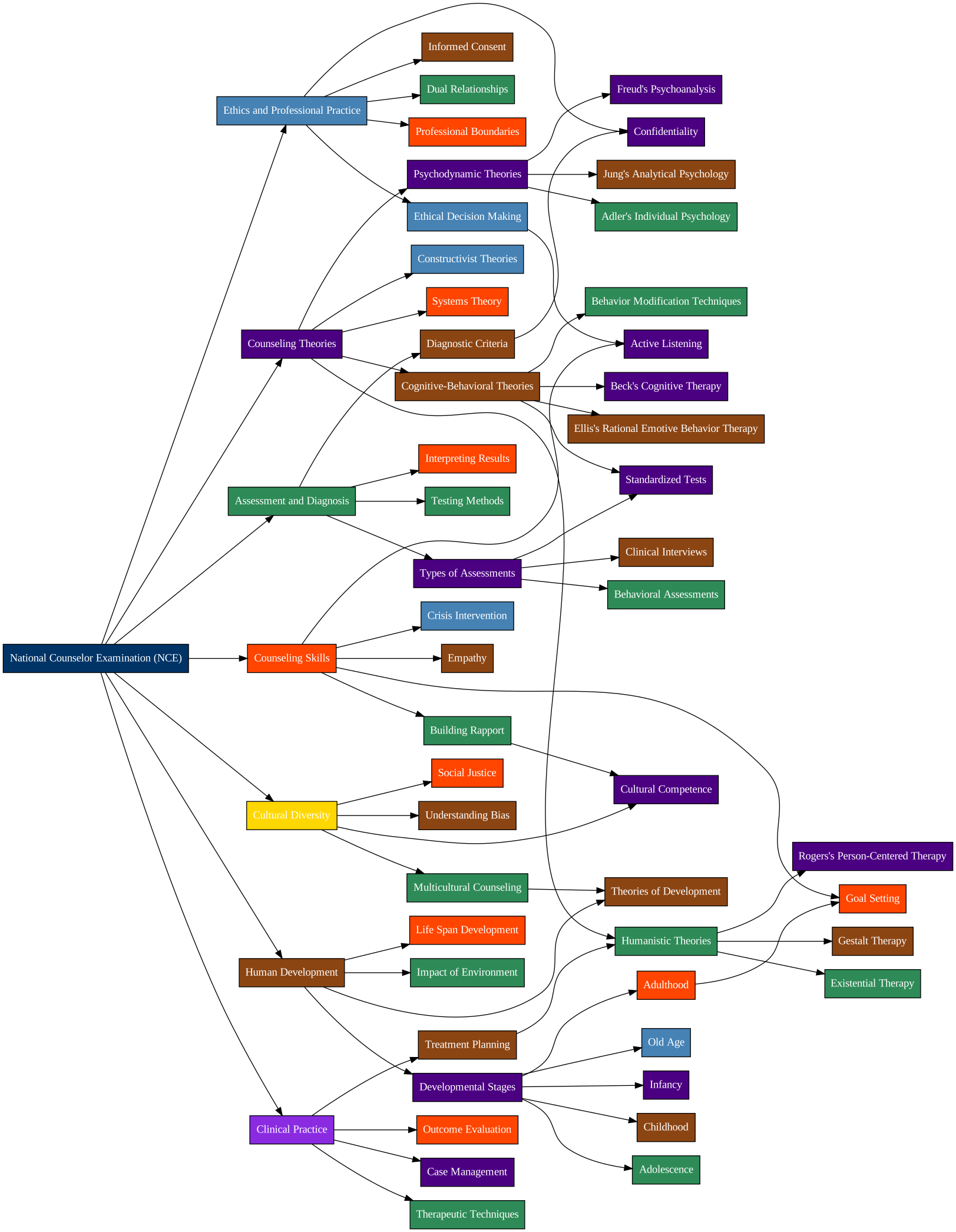
Quiz-summary
0 of 30 questions completed
Questions:
- 1
- 2
- 3
- 4
- 5
- 6
- 7
- 8
- 9
- 10
- 11
- 12
- 13
- 14
- 15
- 16
- 17
- 18
- 19
- 20
- 21
- 22
- 23
- 24
- 25
- 26
- 27
- 28
- 29
- 30
Information
Premium Practice Questions
You have already completed the quiz before. Hence you can not start it again.
Quiz is loading...
You must sign in or sign up to start the quiz.
You have to finish following quiz, to start this quiz:
Results
0 of 30 questions answered correctly
Your time:
Time has elapsed
You have reached 0 of 0 points, (0)
Categories
- Not categorized 0%
- 1
- 2
- 3
- 4
- 5
- 6
- 7
- 8
- 9
- 10
- 11
- 12
- 13
- 14
- 15
- 16
- 17
- 18
- 19
- 20
- 21
- 22
- 23
- 24
- 25
- 26
- 27
- 28
- 29
- 30
- Answered
- Review
-
Question 1 of 30
1. Question
In a scenario where a technology company is experiencing rapid changes in market demand and competitive pressures, which strategic planning approach would be most effective for ensuring the company remains competitive and responsive? Consider the implications of internal capabilities and external market conditions in your response. How should the company structure its strategic planning process to effectively address these challenges and leverage potential opportunities?
Correct
To determine the most effective strategic planning approach for a company facing rapid market changes, we need to analyze the situation. The company must assess its internal capabilities and external market conditions. A SWOT analysis (Strengths, Weaknesses, Opportunities, Threats) can be employed to identify key areas for strategic focus. The company should prioritize agility and responsiveness in its planning process, allowing for quick adjustments to strategies based on market feedback. This approach emphasizes the importance of continuous monitoring and evaluation of both internal and external factors. By implementing a flexible strategic planning model, the company can better navigate uncertainties and capitalize on emerging opportunities. Therefore, the most effective approach is to adopt a dynamic strategic planning framework that encourages adaptability and proactive decision-making.
Incorrect
To determine the most effective strategic planning approach for a company facing rapid market changes, we need to analyze the situation. The company must assess its internal capabilities and external market conditions. A SWOT analysis (Strengths, Weaknesses, Opportunities, Threats) can be employed to identify key areas for strategic focus. The company should prioritize agility and responsiveness in its planning process, allowing for quick adjustments to strategies based on market feedback. This approach emphasizes the importance of continuous monitoring and evaluation of both internal and external factors. By implementing a flexible strategic planning model, the company can better navigate uncertainties and capitalize on emerging opportunities. Therefore, the most effective approach is to adopt a dynamic strategic planning framework that encourages adaptability and proactive decision-making.
-
Question 2 of 30
2. Question
In a project management scenario, a team of five members is tasked with completing a project within a month. Each member has an individual target of 100% completion of their assigned tasks. After a month, the team reviews their performance and finds that they collectively achieved 80% of their individual targets. What is the overall team performance percentage based on their collective achievement? Consider how this performance metric reflects on the team’s ability to work together and meet their goals, and discuss the implications of this performance level for future projects and team dynamics.
Correct
To assess team performance effectively, a manager must consider various performance metrics, including individual contributions, team dynamics, and overall outcomes. In this scenario, we will analyze a team of five members who have set a collective goal to complete a project within a month. Each member has specific tasks contributing to the overall project completion. If the team achieves 80% of their individual targets, the overall team performance can be calculated as follows: 1. Total individual targets = 5 members * 100% = 500% (assuming each member’s target is 100%). 2. Achieved performance = 80% of 500% = 400%. Thus, the overall team performance percentage is 400% of the total target. The correct answer is 400%, which reflects the team’s ability to meet their collective goals despite individual variances in performance.
Incorrect
To assess team performance effectively, a manager must consider various performance metrics, including individual contributions, team dynamics, and overall outcomes. In this scenario, we will analyze a team of five members who have set a collective goal to complete a project within a month. Each member has specific tasks contributing to the overall project completion. If the team achieves 80% of their individual targets, the overall team performance can be calculated as follows: 1. Total individual targets = 5 members * 100% = 500% (assuming each member’s target is 100%). 2. Achieved performance = 80% of 500% = 400%. Thus, the overall team performance percentage is 400% of the total target. The correct answer is 400%, which reflects the team’s ability to meet their collective goals despite individual variances in performance.
-
Question 3 of 30
3. Question
In a scenario where a manager decides to implement a new data analytics tool to enhance decision-making accuracy within their team, the previous accuracy of decisions was recorded at 70%. After the implementation, the tool is expected to improve decision-making accuracy by 30%. What will be the new decision-making accuracy after the implementation of this technology? Consider the implications of this change and how it might affect team dynamics and overall performance.
Correct
In the context of technology in management, the integration of digital tools can significantly enhance decision-making processes. For instance, if a manager implements a data analytics tool that improves decision accuracy by 30%, and the previous decision-making accuracy was 70%, the new accuracy can be calculated as follows: Previous accuracy = 70% Improvement = 30% of 70% = 0.30 * 70 = 21% New accuracy = Previous accuracy + Improvement = 70% + 21% = 91% Thus, the new decision-making accuracy after implementing the technology is 91%. This example illustrates how technology can transform management practices by providing data-driven insights that lead to more informed decisions. Managers must understand the implications of such tools, including the need for training staff to utilize these technologies effectively and the potential for resistance to change. The successful integration of technology requires not only the right tools but also a strategic approach to change management, ensuring that all team members are on board and capable of leveraging new systems to enhance productivity and efficiency.
Incorrect
In the context of technology in management, the integration of digital tools can significantly enhance decision-making processes. For instance, if a manager implements a data analytics tool that improves decision accuracy by 30%, and the previous decision-making accuracy was 70%, the new accuracy can be calculated as follows: Previous accuracy = 70% Improvement = 30% of 70% = 0.30 * 70 = 21% New accuracy = Previous accuracy + Improvement = 70% + 21% = 91% Thus, the new decision-making accuracy after implementing the technology is 91%. This example illustrates how technology can transform management practices by providing data-driven insights that lead to more informed decisions. Managers must understand the implications of such tools, including the need for training staff to utilize these technologies effectively and the potential for resistance to change. The successful integration of technology requires not only the right tools but also a strategic approach to change management, ensuring that all team members are on board and capable of leveraging new systems to enhance productivity and efficiency.
-
Question 4 of 30
4. Question
In a scenario where a company is striving to enhance its market share through improved customer service, the management team decides to implement a new assessment framework for their customer service representatives. They aim to ensure that the assessments are closely aligned with the organizational objectives of increasing customer satisfaction and retention. What is the most effective approach for the management team to take in order to achieve this alignment? Consider the various aspects of assessment design, including the selection of performance metrics, feedback mechanisms, and the integration of employee development plans.
Correct
To align assessments with organizational objectives, it is essential to first identify the key performance indicators (KPIs) that reflect the organization’s goals. For instance, if an organization aims to improve customer satisfaction, the assessment should measure employee performance in customer service roles. The alignment process involves mapping the assessment criteria directly to these KPIs. This ensures that the evaluation not only measures individual performance but also contributes to the overall strategic objectives of the organization. By doing so, organizations can ensure that their workforce is effectively contributing to their goals, leading to improved performance and productivity. The final answer reflects the importance of this alignment in achieving organizational success.
Incorrect
To align assessments with organizational objectives, it is essential to first identify the key performance indicators (KPIs) that reflect the organization’s goals. For instance, if an organization aims to improve customer satisfaction, the assessment should measure employee performance in customer service roles. The alignment process involves mapping the assessment criteria directly to these KPIs. This ensures that the evaluation not only measures individual performance but also contributes to the overall strategic objectives of the organization. By doing so, organizations can ensure that their workforce is effectively contributing to their goals, leading to improved performance and productivity. The final answer reflects the importance of this alignment in achieving organizational success.
-
Question 5 of 30
5. Question
In a recent case study, a manufacturing company faced a sudden disruption in its supply chain due to unforeseen circumstances. To address this challenge, the management team decided to implement several strategies aimed at enhancing organizational resilience. They focused on cross-training employees to ensure that multiple team members could perform various roles, diversifying their supplier base to reduce dependency on a single source, and improving internal communication to facilitate quicker decision-making. Considering these strategies, which of the following best encapsulates the overall approach the company took to build resilience within its organization?
Correct
To build organizational resilience, it is essential to understand the key components that contribute to a resilient organization. These components include adaptability, resourcefulness, and the ability to learn from past experiences. A resilient organization can effectively respond to disruptions and maintain its core functions. In this scenario, we analyze a company that faced a significant operational challenge due to a sudden market shift. The company implemented a strategic plan that involved cross-training employees, diversifying suppliers, and enhancing communication channels. By evaluating the effectiveness of these strategies, we can determine the overall resilience of the organization. The correct answer reflects the most comprehensive approach to building resilience, which encompasses all these elements.
Incorrect
To build organizational resilience, it is essential to understand the key components that contribute to a resilient organization. These components include adaptability, resourcefulness, and the ability to learn from past experiences. A resilient organization can effectively respond to disruptions and maintain its core functions. In this scenario, we analyze a company that faced a significant operational challenge due to a sudden market shift. The company implemented a strategic plan that involved cross-training employees, diversifying suppliers, and enhancing communication channels. By evaluating the effectiveness of these strategies, we can determine the overall resilience of the organization. The correct answer reflects the most comprehensive approach to building resilience, which encompasses all these elements.
-
Question 6 of 30
6. Question
In a recent project, a manager was tasked with presenting the same technical information to two different groups: a team of engineers and a group of senior executives. The engineers were familiar with the technical details, while the executives had limited technical knowledge. How should the manager approach this situation to ensure effective communication? Consider the techniques that would best facilitate understanding and engagement from both groups, and identify the most effective strategy.
Correct
Effective communication techniques are essential for successful leadership and management. One key aspect of effective communication is the ability to adapt one’s communication style to suit different audiences. For instance, a manager may need to communicate complex information to a technical team while also needing to convey the same information to non-technical stakeholders. This requires an understanding of the audience’s background, knowledge level, and preferences. In this scenario, the manager must assess the communication needs of both groups. For the technical team, the manager might use detailed data and technical jargon, while for the non-technical stakeholders, a simplified overview with visual aids may be more effective. This adaptability not only enhances understanding but also fosters engagement and trust. Moreover, effective communication involves active listening, where the manager not only conveys information but also encourages feedback and questions. This two-way communication helps to clarify misunderstandings and ensures that all parties are on the same page. Therefore, the ability to tailor communication strategies based on the audience’s needs is a critical component of effective leadership.
Incorrect
Effective communication techniques are essential for successful leadership and management. One key aspect of effective communication is the ability to adapt one’s communication style to suit different audiences. For instance, a manager may need to communicate complex information to a technical team while also needing to convey the same information to non-technical stakeholders. This requires an understanding of the audience’s background, knowledge level, and preferences. In this scenario, the manager must assess the communication needs of both groups. For the technical team, the manager might use detailed data and technical jargon, while for the non-technical stakeholders, a simplified overview with visual aids may be more effective. This adaptability not only enhances understanding but also fosters engagement and trust. Moreover, effective communication involves active listening, where the manager not only conveys information but also encourages feedback and questions. This two-way communication helps to clarify misunderstandings and ensures that all parties are on the same page. Therefore, the ability to tailor communication strategies based on the audience’s needs is a critical component of effective leadership.
-
Question 7 of 30
7. Question
In a project management scenario, a manager is tasked with preparing a budget for a new product launch. The fixed costs associated with the project are estimated to be £10,000. Additionally, the variable costs are projected to be £50 per unit, and the team anticipates producing 200 units. What would be the total budget required for this project? Consider both fixed and variable costs in your calculations to arrive at the correct total budget.
Correct
To calculate the total budget for a project, we need to consider both fixed and variable costs. Let’s assume the fixed costs are £10,000, and the variable costs are estimated at £50 per unit. If the project anticipates producing 200 units, the total variable costs would be calculated as follows: Total Variable Costs = Variable Cost per Unit × Number of Units Total Variable Costs = £50 × 200 = £10,000 Now, we add the fixed costs to the total variable costs to find the total budget: Total Budget = Fixed Costs + Total Variable Costs Total Budget = £10,000 + £10,000 = £20,000 Thus, the total budget for the project is £20,000. This calculation illustrates the importance of understanding both fixed and variable costs in budgeting. Fixed costs remain constant regardless of production levels, while variable costs fluctuate based on the number of units produced. Effective budgeting requires managers to accurately estimate both types of costs to ensure that the project remains financially viable. Additionally, this understanding aids in financial forecasting, allowing managers to predict future expenses and revenues based on different production scenarios.
Incorrect
To calculate the total budget for a project, we need to consider both fixed and variable costs. Let’s assume the fixed costs are £10,000, and the variable costs are estimated at £50 per unit. If the project anticipates producing 200 units, the total variable costs would be calculated as follows: Total Variable Costs = Variable Cost per Unit × Number of Units Total Variable Costs = £50 × 200 = £10,000 Now, we add the fixed costs to the total variable costs to find the total budget: Total Budget = Fixed Costs + Total Variable Costs Total Budget = £10,000 + £10,000 = £20,000 Thus, the total budget for the project is £20,000. This calculation illustrates the importance of understanding both fixed and variable costs in budgeting. Fixed costs remain constant regardless of production levels, while variable costs fluctuate based on the number of units produced. Effective budgeting requires managers to accurately estimate both types of costs to ensure that the project remains financially viable. Additionally, this understanding aids in financial forecasting, allowing managers to predict future expenses and revenues based on different production scenarios.
-
Question 8 of 30
8. Question
In the context of the strategic planning process, a company has recently completed a SWOT analysis and identified several key strengths and weaknesses. They are now at the stage where they need to set specific objectives that will guide their strategic initiatives for the upcoming year. Which of the following best describes the next logical step in this process? Consider the implications of each option in terms of aligning the company’s resources and efforts with its overall mission and vision.
Correct
In the strategic planning process, organizations typically follow a series of steps to ensure that their goals align with their mission and vision. The first step is to conduct a SWOT analysis, which identifies the organization’s Strengths, Weaknesses, Opportunities, and Threats. This analysis helps in understanding the internal and external environments. Next, organizations set specific, measurable, achievable, relevant, and time-bound (SMART) objectives based on the insights gained from the SWOT analysis. After establishing these objectives, the organization develops strategies to achieve them, which may include resource allocation, risk management, and performance metrics. Finally, the implementation phase involves executing the strategies and monitoring progress through regular reviews and adjustments as necessary. The entire process is iterative, meaning that feedback from the implementation phase can lead to revisions in the planning phase.
Incorrect
In the strategic planning process, organizations typically follow a series of steps to ensure that their goals align with their mission and vision. The first step is to conduct a SWOT analysis, which identifies the organization’s Strengths, Weaknesses, Opportunities, and Threats. This analysis helps in understanding the internal and external environments. Next, organizations set specific, measurable, achievable, relevant, and time-bound (SMART) objectives based on the insights gained from the SWOT analysis. After establishing these objectives, the organization develops strategies to achieve them, which may include resource allocation, risk management, and performance metrics. Finally, the implementation phase involves executing the strategies and monitoring progress through regular reviews and adjustments as necessary. The entire process is iterative, meaning that feedback from the implementation phase can lead to revisions in the planning phase.
-
Question 9 of 30
9. Question
In a scenario where a project team is tasked with completing 120 deliverables within a quarter, the team successfully completes 90 deliverables by the end of the quarter. As a manager, you are required to evaluate the team’s performance. What percentage of the target deliverables did the team achieve, and what implications might this have for future project planning and team dynamics? Consider how this evaluation could inform your approach to setting future targets and providing support to the team.
Correct
To effectively monitor and evaluate team performance, a manager can utilize various techniques such as setting clear performance indicators, conducting regular feedback sessions, and utilizing performance management software. For instance, if a team has a target of completing 100 tasks in a month and they complete 80 tasks, the performance can be evaluated as follows: Performance = (Tasks Completed / Target Tasks) * 100 Performance = (80 / 100) * 100 = 80% This indicates that the team has achieved 80% of their target. To further evaluate, the manager can analyze the reasons behind the shortfall, such as resource availability or team dynamics, and implement strategies for improvement. Regular monitoring allows for timely interventions, ensuring that the team remains aligned with organizational goals. In summary, effective monitoring and evaluation involve not only measuring outcomes but also understanding the underlying factors that contribute to performance levels. This holistic approach enables managers to foster a culture of continuous improvement and accountability within their teams.
Incorrect
To effectively monitor and evaluate team performance, a manager can utilize various techniques such as setting clear performance indicators, conducting regular feedback sessions, and utilizing performance management software. For instance, if a team has a target of completing 100 tasks in a month and they complete 80 tasks, the performance can be evaluated as follows: Performance = (Tasks Completed / Target Tasks) * 100 Performance = (80 / 100) * 100 = 80% This indicates that the team has achieved 80% of their target. To further evaluate, the manager can analyze the reasons behind the shortfall, such as resource availability or team dynamics, and implement strategies for improvement. Regular monitoring allows for timely interventions, ensuring that the team remains aligned with organizational goals. In summary, effective monitoring and evaluation involve not only measuring outcomes but also understanding the underlying factors that contribute to performance levels. This holistic approach enables managers to foster a culture of continuous improvement and accountability within their teams.
-
Question 10 of 30
10. Question
In a project management scenario, a project manager is conducting a qualitative risk assessment to evaluate potential risks associated with a new product launch. The manager identifies three significant risks: Risk A has a likelihood of occurring at 30% with an impact score of 8, Risk B has a likelihood of 50% with an impact score of 5, and Risk C has a likelihood of 20% with an impact score of 10. After calculating the risk scores for each identified risk, what is the total risk score for the project? This score will guide the project manager in determining the necessary risk mitigation strategies and resource allocation.
Correct
To assess the risk of a project, we can use a qualitative risk assessment approach, which involves identifying potential risks, analyzing their impact, and determining their likelihood. In this scenario, we have identified three risks with the following characteristics: 1. Risk A: Likelihood = 0.3, Impact = 8 2. Risk B: Likelihood = 0.5, Impact = 5 3. Risk C: Likelihood = 0.2, Impact = 10 To calculate the risk score for each risk, we multiply the likelihood by the impact: – Risk A Score = 0.3 * 8 = 2.4 – Risk B Score = 0.5 * 5 = 2.5 – Risk C Score = 0.2 * 10 = 2.0 Next, we sum the scores of all identified risks to get the total risk score for the project: Total Risk Score = Risk A Score + Risk B Score + Risk C Score Total Risk Score = 2.4 + 2.5 + 2.0 = 6.9 Thus, the total risk score for the project is 6.9. This score helps project managers understand the overall risk exposure and prioritize risk management strategies accordingly.
Incorrect
To assess the risk of a project, we can use a qualitative risk assessment approach, which involves identifying potential risks, analyzing their impact, and determining their likelihood. In this scenario, we have identified three risks with the following characteristics: 1. Risk A: Likelihood = 0.3, Impact = 8 2. Risk B: Likelihood = 0.5, Impact = 5 3. Risk C: Likelihood = 0.2, Impact = 10 To calculate the risk score for each risk, we multiply the likelihood by the impact: – Risk A Score = 0.3 * 8 = 2.4 – Risk B Score = 0.5 * 5 = 2.5 – Risk C Score = 0.2 * 10 = 2.0 Next, we sum the scores of all identified risks to get the total risk score for the project: Total Risk Score = Risk A Score + Risk B Score + Risk C Score Total Risk Score = 2.4 + 2.5 + 2.0 = 6.9 Thus, the total risk score for the project is 6.9. This score helps project managers understand the overall risk exposure and prioritize risk management strategies accordingly.
-
Question 11 of 30
11. Question
In a project management scenario, a project has fixed costs of $5000 and variable costs of $200 per unit. If the project aims to produce 30 units, what will be the total cost of the project? Use the formula for total cost, which is defined as: $$ \text{Total Cost} = \text{Fixed Costs} + \text{Variable Costs} \times \text{Quantity} $$ Substituting the values into the formula, calculate the total cost incurred by the project. Consider the implications of fixed and variable costs in your analysis, and ensure that your final answer reflects the total expenditure required for the successful completion of the project.
Correct
To determine the total cost of a project, we can use the formula for total cost, which is given by: $$ \text{Total Cost} = \text{Fixed Costs} + \text{Variable Costs} \times \text{Quantity} $$ In this scenario, the fixed costs are $F = 5000$ and the variable costs per unit are $V = 200$. If the project is expected to produce $Q = 30$ units, we can substitute these values into the formula: $$ \text{Total Cost} = 5000 + 200 \times 30 $$ Calculating the variable costs: $$ 200 \times 30 = 6000 $$ Now, substituting back into the total cost formula: $$ \text{Total Cost} = 5000 + 6000 = 11000 $$ Thus, the total cost of the project is $11000$. This calculation illustrates the importance of understanding both fixed and variable costs in project management. Fixed costs remain constant regardless of the level of production, while variable costs fluctuate with the quantity produced. Effective project management requires careful consideration of these costs to ensure that the project remains within budget and is financially viable.
Incorrect
To determine the total cost of a project, we can use the formula for total cost, which is given by: $$ \text{Total Cost} = \text{Fixed Costs} + \text{Variable Costs} \times \text{Quantity} $$ In this scenario, the fixed costs are $F = 5000$ and the variable costs per unit are $V = 200$. If the project is expected to produce $Q = 30$ units, we can substitute these values into the formula: $$ \text{Total Cost} = 5000 + 200 \times 30 $$ Calculating the variable costs: $$ 200 \times 30 = 6000 $$ Now, substituting back into the total cost formula: $$ \text{Total Cost} = 5000 + 6000 = 11000 $$ Thus, the total cost of the project is $11000$. This calculation illustrates the importance of understanding both fixed and variable costs in project management. Fixed costs remain constant regardless of the level of production, while variable costs fluctuate with the quantity produced. Effective project management requires careful consideration of these costs to ensure that the project remains within budget and is financially viable.
-
Question 12 of 30
12. Question
In the context of Kotter’s 8-Step Process for Change Management, which step is considered the most critical for overcoming resistance to change within an organization, particularly when introducing new technology? Consider a scenario where employees are hesitant to adopt a new system due to fear of the unknown and potential disruptions to their workflow. How would you explain the significance of this step in the overall change management process?
Correct
Kotter’s 8-Step Process for Change Management is a widely recognized model that outlines a structured approach to implementing change within an organization. The steps include: 1. Create urgency 2. Form a powerful coalition 3. Create a vision for change 4. Communicate the vision 5. Empower action 6. Create quick wins 7. Build on the change 8. Anchor the changes in corporate culture In a scenario where a company is facing resistance to a new technology implementation, the first step, “Create urgency,” is crucial. This involves demonstrating the need for change by highlighting potential risks of not adopting the new technology, such as falling behind competitors or losing market share. By effectively communicating these risks, the organization can motivate employees to embrace the change. The correct answer reflects the importance of this initial step in Kotter’s model, as it sets the foundation for the subsequent actions necessary for successful change management.
Incorrect
Kotter’s 8-Step Process for Change Management is a widely recognized model that outlines a structured approach to implementing change within an organization. The steps include: 1. Create urgency 2. Form a powerful coalition 3. Create a vision for change 4. Communicate the vision 5. Empower action 6. Create quick wins 7. Build on the change 8. Anchor the changes in corporate culture In a scenario where a company is facing resistance to a new technology implementation, the first step, “Create urgency,” is crucial. This involves demonstrating the need for change by highlighting potential risks of not adopting the new technology, such as falling behind competitors or losing market share. By effectively communicating these risks, the organization can motivate employees to embrace the change. The correct answer reflects the importance of this initial step in Kotter’s model, as it sets the foundation for the subsequent actions necessary for successful change management.
-
Question 13 of 30
13. Question
In a recent team meeting, a conflict arose between two team members over differing opinions on a project direction. As the team leader, you recognize that the situation requires immediate attention to prevent further escalation. How would you best utilize emotional intelligence to address this conflict? Consider the steps you would take to ensure that both team members feel heard and valued while also steering the team towards a constructive resolution. What is the most effective approach to demonstrate emotional intelligence in this scenario?
Correct
Emotional intelligence (EI) in leadership is the ability to recognize, understand, and manage our own emotions as well as the emotions of others. A leader with high emotional intelligence can create a positive work environment, foster collaboration, and enhance team performance. In this scenario, we consider a leader who is facing a conflict within their team. The leader’s ability to empathize with team members, communicate effectively, and manage their own emotional responses will determine the outcome of the situation. By applying emotional intelligence, the leader can de-escalate tensions, facilitate open dialogue, and guide the team toward a resolution that respects everyone’s feelings and perspectives. This approach not only resolves the immediate conflict but also strengthens team cohesion and trust in the long run.
Incorrect
Emotional intelligence (EI) in leadership is the ability to recognize, understand, and manage our own emotions as well as the emotions of others. A leader with high emotional intelligence can create a positive work environment, foster collaboration, and enhance team performance. In this scenario, we consider a leader who is facing a conflict within their team. The leader’s ability to empathize with team members, communicate effectively, and manage their own emotional responses will determine the outcome of the situation. By applying emotional intelligence, the leader can de-escalate tensions, facilitate open dialogue, and guide the team toward a resolution that respects everyone’s feelings and perspectives. This approach not only resolves the immediate conflict but also strengthens team cohesion and trust in the long run.
-
Question 14 of 30
14. Question
A manufacturing company incurs fixed costs of £10,000 and variable costs of £5 per unit. If the company plans to produce 2,000 units and sells each unit for £15, what will be the total cost of production? Additionally, what is the break-even point in units for this company? Consider the implications of these figures on the company’s financial performance and decision-making.
Correct
To determine the total cost of production, we need to calculate the fixed and variable costs. The fixed costs are given as £10,000, and the variable cost per unit is £5. If the company produces 2,000 units, the total variable cost will be calculated as follows: Total Variable Cost = Variable Cost per Unit × Number of Units Total Variable Cost = £5 × 2,000 = £10,000 Now, we can find the total cost of production by adding the fixed costs to the total variable costs: Total Cost = Fixed Costs + Total Variable Costs Total Cost = £10,000 + £10,000 = £20,000 Next, we need to analyze the financial performance by calculating the break-even point in units. The selling price per unit is £15. The contribution margin per unit can be calculated as follows: Contribution Margin per Unit = Selling Price per Unit – Variable Cost per Unit Contribution Margin per Unit = £15 – £5 = £10 Now, we can calculate the break-even point in units: Break-even Point (Units) = Fixed Costs / Contribution Margin per Unit Break-even Point (Units) = £10,000 / £10 = 1,000 units Thus, the total cost of production for 2,000 units is £20,000, and the break-even point is 1,000 units.
Incorrect
To determine the total cost of production, we need to calculate the fixed and variable costs. The fixed costs are given as £10,000, and the variable cost per unit is £5. If the company produces 2,000 units, the total variable cost will be calculated as follows: Total Variable Cost = Variable Cost per Unit × Number of Units Total Variable Cost = £5 × 2,000 = £10,000 Now, we can find the total cost of production by adding the fixed costs to the total variable costs: Total Cost = Fixed Costs + Total Variable Costs Total Cost = £10,000 + £10,000 = £20,000 Next, we need to analyze the financial performance by calculating the break-even point in units. The selling price per unit is £15. The contribution margin per unit can be calculated as follows: Contribution Margin per Unit = Selling Price per Unit – Variable Cost per Unit Contribution Margin per Unit = £15 – £5 = £10 Now, we can calculate the break-even point in units: Break-even Point (Units) = Fixed Costs / Contribution Margin per Unit Break-even Point (Units) = £10,000 / £10 = 1,000 units Thus, the total cost of production for 2,000 units is £20,000, and the break-even point is 1,000 units.
-
Question 15 of 30
15. Question
In a recent financial analysis, a company reported total revenue of £500,000 and total expenses amounting to £350,000. As a manager, you are tasked with evaluating the company’s profitability. What is the net profit margin for this company, and how does it reflect on the company’s financial health? Consider the implications of this margin in terms of operational efficiency and strategic decision-making.
Correct
To determine the net profit margin, we first need to calculate the net profit and then divide it by the total revenue. The formula for net profit margin is: Net Profit Margin = (Net Profit / Total Revenue) x 100 Given: – Total Revenue = £500,000 – Total Expenses = £350,000 First, we calculate the net profit: Net Profit = Total Revenue – Total Expenses Net Profit = £500,000 – £350,000 Net Profit = £150,000 Now, we can calculate the net profit margin: Net Profit Margin = (Net Profit / Total Revenue) x 100 Net Profit Margin = (£150,000 / £500,000) x 100 Net Profit Margin = 0.3 x 100 Net Profit Margin = 30% Thus, the net profit margin is 30%. The net profit margin is a crucial financial metric that indicates how much profit a company makes for every pound of revenue generated. A higher net profit margin suggests that a company is more efficient at converting revenue into actual profit, which is essential for assessing the overall financial health of the organization. Managers must understand this metric to make informed decisions regarding pricing, cost control, and operational efficiency. It also helps in comparing the profitability of different companies within the same industry, allowing managers to identify best practices and areas for improvement.
Incorrect
To determine the net profit margin, we first need to calculate the net profit and then divide it by the total revenue. The formula for net profit margin is: Net Profit Margin = (Net Profit / Total Revenue) x 100 Given: – Total Revenue = £500,000 – Total Expenses = £350,000 First, we calculate the net profit: Net Profit = Total Revenue – Total Expenses Net Profit = £500,000 – £350,000 Net Profit = £150,000 Now, we can calculate the net profit margin: Net Profit Margin = (Net Profit / Total Revenue) x 100 Net Profit Margin = (£150,000 / £500,000) x 100 Net Profit Margin = 0.3 x 100 Net Profit Margin = 30% Thus, the net profit margin is 30%. The net profit margin is a crucial financial metric that indicates how much profit a company makes for every pound of revenue generated. A higher net profit margin suggests that a company is more efficient at converting revenue into actual profit, which is essential for assessing the overall financial health of the organization. Managers must understand this metric to make informed decisions regarding pricing, cost control, and operational efficiency. It also helps in comparing the profitability of different companies within the same industry, allowing managers to identify best practices and areas for improvement.
-
Question 16 of 30
16. Question
A manager is evaluating a new product line and needs to determine the break-even point to assess its financial viability. The fixed costs associated with the product line are estimated to be £50,000. The selling price per unit is set at £25, while the variable cost per unit is projected to be £15. How many units must the manager sell to reach the break-even point, ensuring that the company does not incur any losses from this new product line?
Correct
To calculate the break-even point in units, we use the formula: Break-even point (units) = Fixed Costs / (Selling Price per Unit – Variable Cost per Unit). Assuming the following values: – Fixed Costs = £50,000 – Selling Price per Unit = £25 – Variable Cost per Unit = £15 First, we calculate the contribution margin per unit: Contribution Margin = Selling Price per Unit – Variable Cost per Unit Contribution Margin = £25 – £15 = £10 Now, we can calculate the break-even point: Break-even point (units) = Fixed Costs / Contribution Margin Break-even point (units) = £50,000 / £10 = 5,000 units Therefore, the break-even point is 5,000 units. In financial management, understanding the break-even point is crucial for managers as it helps them determine the minimum sales volume needed to avoid losses. This metric allows managers to make informed decisions regarding pricing, cost control, and sales strategies. By knowing how many units must be sold to cover fixed and variable costs, managers can set realistic sales targets and assess the viability of new projects or product lines. Additionally, it aids in evaluating the impact of changes in costs or pricing strategies on profitability. This understanding is essential for effective financial planning and resource allocation within an organization.
Incorrect
To calculate the break-even point in units, we use the formula: Break-even point (units) = Fixed Costs / (Selling Price per Unit – Variable Cost per Unit). Assuming the following values: – Fixed Costs = £50,000 – Selling Price per Unit = £25 – Variable Cost per Unit = £15 First, we calculate the contribution margin per unit: Contribution Margin = Selling Price per Unit – Variable Cost per Unit Contribution Margin = £25 – £15 = £10 Now, we can calculate the break-even point: Break-even point (units) = Fixed Costs / Contribution Margin Break-even point (units) = £50,000 / £10 = 5,000 units Therefore, the break-even point is 5,000 units. In financial management, understanding the break-even point is crucial for managers as it helps them determine the minimum sales volume needed to avoid losses. This metric allows managers to make informed decisions regarding pricing, cost control, and sales strategies. By knowing how many units must be sold to cover fixed and variable costs, managers can set realistic sales targets and assess the viability of new projects or product lines. Additionally, it aids in evaluating the impact of changes in costs or pricing strategies on profitability. This understanding is essential for effective financial planning and resource allocation within an organization.
-
Question 17 of 30
17. Question
In a mid-sized technology firm, the management has decided to implement a new software system to enhance productivity. However, they are encountering significant resistance from employees who are accustomed to the old system. The management team is considering various strategies to facilitate this change. Which approach would most effectively address the resistance and ensure a smoother transition to the new software system? a) Implement a structured change management process that includes clear communication, employee involvement, and training sessions. b) Mandate the use of the new software without providing any training or support to employees. c) Delay the implementation of the new software until all employees are fully comfortable with the old system. d) Provide minimal information about the new software and allow employees to figure it out on their own.
Correct
To determine the best approach for managing change in an organization, we need to analyze the scenario presented. The organization is facing resistance to a new technology implementation. The key factors to consider include the level of employee engagement, the clarity of communication regarding the change, and the support provided during the transition. In this case, the most effective strategy would involve a combination of clear communication, employee involvement in the change process, and adequate training. By engaging employees and addressing their concerns, the organization can reduce resistance and foster a more positive attitude towards the change. The final answer is based on the understanding that successful change management requires a holistic approach that considers both the technical and human aspects of the transition. Therefore, the best approach is to implement a structured change management process that includes these elements.
Incorrect
To determine the best approach for managing change in an organization, we need to analyze the scenario presented. The organization is facing resistance to a new technology implementation. The key factors to consider include the level of employee engagement, the clarity of communication regarding the change, and the support provided during the transition. In this case, the most effective strategy would involve a combination of clear communication, employee involvement in the change process, and adequate training. By engaging employees and addressing their concerns, the organization can reduce resistance and foster a more positive attitude towards the change. The final answer is based on the understanding that successful change management requires a holistic approach that considers both the technical and human aspects of the transition. Therefore, the best approach is to implement a structured change management process that includes these elements.
-
Question 18 of 30
18. Question
In a project management scenario, a team of five members is tasked with completing a project within a 10-week timeframe. Each member has varying levels of productivity, with Member A completing 2 tasks per week, Member B completing 1.5 tasks per week, Member C completing 1 task per week, Member D completing 2.5 tasks per week, and Member E completing 1.5 tasks per week. If the team is expected to complete a total of 100 tasks by the end of the project, what is the overall performance percentage of the team upon completion? Consider how this performance metric can influence future project planning and team management strategies.
Correct
To assess team performance effectively, a manager must consider various performance metrics, including individual contributions, team dynamics, and overall outcomes. In this scenario, we will analyze a team of five members who have been assigned a project with a target completion time of 10 weeks. Each member has different performance levels, which can be quantified as follows: Member A completes 2 tasks per week, Member B completes 1.5 tasks per week, Member C completes 1 task per week, Member D completes 2.5 tasks per week, and Member E completes 1.5 tasks per week. First, we calculate the total tasks completed by each member over the 10 weeks: – Member A: 2 tasks/week * 10 weeks = 20 tasks – Member B: 1.5 tasks/week * 10 weeks = 15 tasks – Member C: 1 task/week * 10 weeks = 10 tasks – Member D: 2.5 tasks/week * 10 weeks = 25 tasks – Member E: 1.5 tasks/week * 10 weeks = 15 tasks Next, we sum these tasks to find the total tasks completed by the team: Total tasks = 20 + 15 + 10 + 25 + 15 = 95 tasks To evaluate the team’s performance, we compare the total tasks completed (95) against the expected output. If the target was to complete 100 tasks, we can calculate the performance percentage: Performance Percentage = (Total tasks completed / Target tasks) * 100 Performance Percentage = (95 / 100) * 100 = 95% Thus, the team’s performance is at 95%.
Incorrect
To assess team performance effectively, a manager must consider various performance metrics, including individual contributions, team dynamics, and overall outcomes. In this scenario, we will analyze a team of five members who have been assigned a project with a target completion time of 10 weeks. Each member has different performance levels, which can be quantified as follows: Member A completes 2 tasks per week, Member B completes 1.5 tasks per week, Member C completes 1 task per week, Member D completes 2.5 tasks per week, and Member E completes 1.5 tasks per week. First, we calculate the total tasks completed by each member over the 10 weeks: – Member A: 2 tasks/week * 10 weeks = 20 tasks – Member B: 1.5 tasks/week * 10 weeks = 15 tasks – Member C: 1 task/week * 10 weeks = 10 tasks – Member D: 2.5 tasks/week * 10 weeks = 25 tasks – Member E: 1.5 tasks/week * 10 weeks = 15 tasks Next, we sum these tasks to find the total tasks completed by the team: Total tasks = 20 + 15 + 10 + 25 + 15 = 95 tasks To evaluate the team’s performance, we compare the total tasks completed (95) against the expected output. If the target was to complete 100 tasks, we can calculate the performance percentage: Performance Percentage = (Total tasks completed / Target tasks) * 100 Performance Percentage = (95 / 100) * 100 = 95% Thus, the team’s performance is at 95%.
-
Question 19 of 30
19. Question
In a recent crisis involving a data breach, an organization had to manage its response and recovery effectively to maintain resilience. The organization took 24 hours to respond to the breach, communicated with stakeholders within 48 hours, and implemented recovery strategies within 72 hours. Considering these factors, how would you evaluate the organization’s resilience on a scale of 1 to 10, where 10 represents exceptional resilience? What factors would contribute to this evaluation, and how does the timing of their actions influence the overall perception of their crisis management effectiveness?
Correct
In crisis management, resilience is the ability of an organization to withstand and recover from adverse situations. To assess resilience, organizations often evaluate their response strategies, communication effectiveness, and recovery plans. In this scenario, the organization faced a data breach that compromised sensitive customer information. The effectiveness of their crisis management can be measured by their response time, the clarity of communication to stakeholders, and the implementation of recovery strategies. Assuming the organization had a response time of 24 hours, communicated effectively with stakeholders within 48 hours, and implemented recovery strategies within 72 hours, we can evaluate their overall resilience. The total time taken for response and recovery is 24 + 48 + 72 = 144 hours. However, resilience is not just about time; it also involves the effectiveness of the measures taken. If the organization managed to restore customer trust and minimize financial loss, we can rate their resilience on a scale of 1 to 10. Given the scenario, a score of 8 would indicate a strong resilience despite the crisis.
Incorrect
In crisis management, resilience is the ability of an organization to withstand and recover from adverse situations. To assess resilience, organizations often evaluate their response strategies, communication effectiveness, and recovery plans. In this scenario, the organization faced a data breach that compromised sensitive customer information. The effectiveness of their crisis management can be measured by their response time, the clarity of communication to stakeholders, and the implementation of recovery strategies. Assuming the organization had a response time of 24 hours, communicated effectively with stakeholders within 48 hours, and implemented recovery strategies within 72 hours, we can evaluate their overall resilience. The total time taken for response and recovery is 24 + 48 + 72 = 144 hours. However, resilience is not just about time; it also involves the effectiveness of the measures taken. If the organization managed to restore customer trust and minimize financial loss, we can rate their resilience on a scale of 1 to 10. Given the scenario, a score of 8 would indicate a strong resilience despite the crisis.
-
Question 20 of 30
20. Question
In a recent team meeting, a leader noticed that one of the team members appeared disengaged and frustrated. Instead of ignoring the situation, the leader decided to address it directly. They approached the team member after the meeting to ask about their feelings and offered support. This action not only helped the team member feel valued but also encouraged open communication within the team. How would you best describe the leader’s approach in this scenario, particularly in relation to emotional intelligence in leadership?
Correct
Emotional intelligence (EI) in leadership encompasses the ability to recognize, understand, and manage one’s own emotions as well as the emotions of others. A leader with high emotional intelligence can effectively navigate social complexities, motivate and inspire teams, and foster a positive work environment. In this scenario, the leader’s ability to empathize with team members and respond to their emotional needs is crucial. By actively listening and providing support, the leader can enhance team morale and productivity. The correct answer reflects the importance of emotional intelligence in creating a cohesive and motivated team, which ultimately leads to better organizational performance.
Incorrect
Emotional intelligence (EI) in leadership encompasses the ability to recognize, understand, and manage one’s own emotions as well as the emotions of others. A leader with high emotional intelligence can effectively navigate social complexities, motivate and inspire teams, and foster a positive work environment. In this scenario, the leader’s ability to empathize with team members and respond to their emotional needs is crucial. By actively listening and providing support, the leader can enhance team morale and productivity. The correct answer reflects the importance of emotional intelligence in creating a cohesive and motivated team, which ultimately leads to better organizational performance.
-
Question 21 of 30
21. Question
In the context of enhancing leadership capabilities, a manager is exploring various networking strategies. They are considering both formal and informal networking approaches. Formal networking might include attending industry conferences and joining professional organizations, while informal networking could involve engaging with peers through social media or community events. Given the manager’s objective to not only expand their professional network but also to gain valuable insights that can improve their leadership skills, which networking strategy should they prioritize for the most effective outcome?
Correct
To determine the most effective networking strategy for a manager looking to enhance their leadership capabilities, we must consider the various approaches available. Networking can be categorized into formal and informal strategies. Formal networking includes attending industry conferences, joining professional organizations, and participating in structured mentorship programs. Informal networking, on the other hand, involves building relationships through casual interactions, social media, and community involvement. In this scenario, the manager’s goal is to not only expand their professional contacts but also to gain insights and knowledge that can enhance their leadership skills. Research indicates that informal networking often leads to more genuine connections and can provide unique insights that formal networking may not offer. Therefore, the most effective strategy would be to prioritize informal networking opportunities while still engaging in formal events to maintain a balanced approach. Thus, the final answer is that the manager should focus on informal networking strategies to enhance their leadership capabilities.
Incorrect
To determine the most effective networking strategy for a manager looking to enhance their leadership capabilities, we must consider the various approaches available. Networking can be categorized into formal and informal strategies. Formal networking includes attending industry conferences, joining professional organizations, and participating in structured mentorship programs. Informal networking, on the other hand, involves building relationships through casual interactions, social media, and community involvement. In this scenario, the manager’s goal is to not only expand their professional contacts but also to gain insights and knowledge that can enhance their leadership skills. Research indicates that informal networking often leads to more genuine connections and can provide unique insights that formal networking may not offer. Therefore, the most effective strategy would be to prioritize informal networking opportunities while still engaging in formal events to maintain a balanced approach. Thus, the final answer is that the manager should focus on informal networking strategies to enhance their leadership capabilities.
-
Question 22 of 30
22. Question
In a recent study examining the effects of various leadership styles on team performance, it was found that teams led by transformational leaders consistently outperformed those led by transactional leaders. The transformational leaders were noted for their ability to inspire and motivate their teams, fostering a culture of innovation and collaboration. In contrast, transactional leaders focused primarily on maintaining order and compliance through rewards and penalties. Given this context, which leadership style is most likely to result in higher levels of team engagement and long-term performance improvement?
Correct
In this scenario, we are examining the impact of different leadership styles on team performance. The transformational leadership style is characterized by its focus on inspiring and motivating team members to exceed their own self-interests for the sake of the team and organization. This style fosters an environment of collaboration, innovation, and high morale. Research indicates that teams led by transformational leaders often exhibit higher levels of engagement and productivity. In contrast, transactional leadership, which emphasizes structure, rewards, and penalties, may lead to compliance but often lacks the same level of enthusiasm and creativity. Therefore, when evaluating the effectiveness of leadership styles, it is crucial to consider not just the immediate outcomes but also the long-term implications on team dynamics and organizational culture. The transformational approach is generally seen as more effective in driving sustained performance improvements.
Incorrect
In this scenario, we are examining the impact of different leadership styles on team performance. The transformational leadership style is characterized by its focus on inspiring and motivating team members to exceed their own self-interests for the sake of the team and organization. This style fosters an environment of collaboration, innovation, and high morale. Research indicates that teams led by transformational leaders often exhibit higher levels of engagement and productivity. In contrast, transactional leadership, which emphasizes structure, rewards, and penalties, may lead to compliance but often lacks the same level of enthusiasm and creativity. Therefore, when evaluating the effectiveness of leadership styles, it is crucial to consider not just the immediate outcomes but also the long-term implications on team dynamics and organizational culture. The transformational approach is generally seen as more effective in driving sustained performance improvements.
-
Question 23 of 30
23. Question
In a mid-sized technology company, the management is evaluating its organizational structure to enhance collaboration and innovation. The current structure is functional, where departments operate independently, leading to communication barriers and slow project execution. The management is considering transitioning to a matrix structure, which would allow for cross-functional teams to work on projects while still maintaining departmental expertise. What are the potential advantages and disadvantages of adopting a matrix structure in this context, and how might it affect the company’s overall performance and employee satisfaction?
Correct
To understand organizational structures, one must analyze how different structures impact communication, decision-making, and overall efficiency within an organization. In a functional structure, departments are organized based on specialized functions, such as marketing, finance, and operations. This can lead to increased efficiency within departments but may create silos that hinder cross-departmental communication. In contrast, a matrix structure combines functional and project-based approaches, allowing for more flexibility and collaboration but potentially leading to confusion over reporting lines. The effectiveness of each structure can vary based on the organization’s size, culture, and strategic goals. Therefore, when evaluating which structure is most suitable, one must consider these factors and how they align with the organization’s objectives.
Incorrect
To understand organizational structures, one must analyze how different structures impact communication, decision-making, and overall efficiency within an organization. In a functional structure, departments are organized based on specialized functions, such as marketing, finance, and operations. This can lead to increased efficiency within departments but may create silos that hinder cross-departmental communication. In contrast, a matrix structure combines functional and project-based approaches, allowing for more flexibility and collaboration but potentially leading to confusion over reporting lines. The effectiveness of each structure can vary based on the organization’s size, culture, and strategic goals. Therefore, when evaluating which structure is most suitable, one must consider these factors and how they align with the organization’s objectives.
-
Question 24 of 30
24. Question
In a scenario where a company with an annual turnover of €500 million fails to comply with the General Data Protection Regulation (GDPR), what is the maximum financial penalty it could face? Consider the implications of this penalty on the company’s operations and the importance of adhering to legal standards in management practices. Discuss how such penalties can affect not only the financial stability of the organization but also its reputation and stakeholder trust.
Correct
In the context of legal and ethical considerations in management, it is crucial to understand the implications of data protection laws on organizational practices. The General Data Protection Regulation (GDPR) mandates that organizations must ensure the confidentiality and integrity of personal data. If a company fails to comply with these regulations, it can face significant fines, which can be up to 4% of its annual global turnover or €20 million, whichever is higher. Therefore, if a company has an annual turnover of €500 million, the maximum fine it could face for non-compliance would be calculated as follows: Maximum fine = 4% of annual turnover = 0.04 * €500,000,000 = €20,000,000 This calculation illustrates the potential financial impact of failing to adhere to legal standards. Understanding these implications is vital for managers to ensure compliance and avoid severe penalties.
Incorrect
In the context of legal and ethical considerations in management, it is crucial to understand the implications of data protection laws on organizational practices. The General Data Protection Regulation (GDPR) mandates that organizations must ensure the confidentiality and integrity of personal data. If a company fails to comply with these regulations, it can face significant fines, which can be up to 4% of its annual global turnover or €20 million, whichever is higher. Therefore, if a company has an annual turnover of €500 million, the maximum fine it could face for non-compliance would be calculated as follows: Maximum fine = 4% of annual turnover = 0.04 * €500,000,000 = €20,000,000 This calculation illustrates the potential financial impact of failing to adhere to legal standards. Understanding these implications is vital for managers to ensure compliance and avoid severe penalties.
-
Question 25 of 30
25. Question
In a recent team meeting, a manager noticed that one of the team members, who is known for their analytical skills, seemed disengaged and unresponsive during discussions. The manager typically communicates in a straightforward manner, focusing on facts and figures. However, they realize that this approach may not resonate with all team members, especially those who thrive in collaborative environments. Considering the importance of effective communication in leadership, what should the manager do to enhance engagement and ensure that all team members feel valued and included in discussions?
Correct
Effective communication skills are essential for leaders to inspire and motivate their teams. In a scenario where a manager is tasked with leading a diverse team, the ability to adapt communication styles to suit different team members is crucial. For instance, if a manager uses a direct communication style with a team member who prefers a more collaborative approach, it may lead to misunderstandings and decreased morale. Conversely, if the manager recognizes the need to adjust their style to be more inclusive and supportive, it can foster a positive team environment and enhance productivity. Therefore, the correct answer reflects the importance of adapting communication styles to meet the needs of diverse team members, which is a key aspect of effective leadership.
Incorrect
Effective communication skills are essential for leaders to inspire and motivate their teams. In a scenario where a manager is tasked with leading a diverse team, the ability to adapt communication styles to suit different team members is crucial. For instance, if a manager uses a direct communication style with a team member who prefers a more collaborative approach, it may lead to misunderstandings and decreased morale. Conversely, if the manager recognizes the need to adjust their style to be more inclusive and supportive, it can foster a positive team environment and enhance productivity. Therefore, the correct answer reflects the importance of adapting communication styles to meet the needs of diverse team members, which is a key aspect of effective leadership.
-
Question 26 of 30
26. Question
In a team meeting, a manager notices that one of the team members, Alex, seems disengaged and uncommunicative. The manager decides to address this issue by implementing a strategy to improve team dynamics. Which approach should the manager prioritize to effectively develop and manage relationships within the team? Consider the importance of emotional intelligence and communication skills in your response.
Correct
To develop and manage relationships effectively, it is crucial to understand the dynamics of interpersonal communication and the role of emotional intelligence. Emotional intelligence encompasses self-awareness, self-regulation, motivation, empathy, and social skills. In this scenario, the manager must assess the emotional climate of their team and identify the best approach to foster collaboration. By utilizing active listening and providing constructive feedback, the manager can enhance trust and rapport among team members. The final answer reflects the most effective strategy for relationship management in a team setting.
Incorrect
To develop and manage relationships effectively, it is crucial to understand the dynamics of interpersonal communication and the role of emotional intelligence. Emotional intelligence encompasses self-awareness, self-regulation, motivation, empathy, and social skills. In this scenario, the manager must assess the emotional climate of their team and identify the best approach to foster collaboration. By utilizing active listening and providing constructive feedback, the manager can enhance trust and rapport among team members. The final answer reflects the most effective strategy for relationship management in a team setting.
-
Question 27 of 30
27. Question
In a scenario where a manager is faced with the decision to implement a new policy that could potentially lead to job cuts in order to improve the company’s financial health, which ethical decision-making framework would most effectively guide the manager in evaluating the implications of their choice? Consider the various aspects of ethical frameworks, including the potential outcomes for employees, the company’s long-term sustainability, and the moral responsibilities of leadership. How should the manager approach this decision to ensure that it aligns with ethical standards while also considering the financial implications for the organization?
Correct
In ethical decision-making frameworks, one must consider various principles such as utilitarianism, deontology, and virtue ethics. Utilitarianism focuses on the outcomes of actions, aiming for the greatest good for the greatest number. Deontology emphasizes duties and rules, regardless of the consequences. Virtue ethics centers on the character and virtues of the individual making the decision. When faced with a dilemma, a manager should analyze the situation through these lenses to arrive at a well-rounded decision. For instance, if a manager must decide whether to cut costs by laying off employees, they should weigh the potential benefits to the company (utilitarianism) against the moral implications of harming individuals (deontology) and consider what a virtuous leader would do in this situation (virtue ethics). The correct approach involves integrating these frameworks to ensure a balanced decision that aligns with both ethical standards and organizational goals.
Incorrect
In ethical decision-making frameworks, one must consider various principles such as utilitarianism, deontology, and virtue ethics. Utilitarianism focuses on the outcomes of actions, aiming for the greatest good for the greatest number. Deontology emphasizes duties and rules, regardless of the consequences. Virtue ethics centers on the character and virtues of the individual making the decision. When faced with a dilemma, a manager should analyze the situation through these lenses to arrive at a well-rounded decision. For instance, if a manager must decide whether to cut costs by laying off employees, they should weigh the potential benefits to the company (utilitarianism) against the moral implications of harming individuals (deontology) and consider what a virtuous leader would do in this situation (virtue ethics). The correct approach involves integrating these frameworks to ensure a balanced decision that aligns with both ethical standards and organizational goals.
-
Question 28 of 30
28. Question
In the context of strategic planning, a company has identified three significant risks that could affect its objectives. The risks have been rated based on their likelihood of occurrence and their potential impact on the organization. Risk A has a likelihood rating of 4 and an impact rating of 5, Risk B has a likelihood rating of 3 and an impact rating of 4, and Risk C has a likelihood rating of 2 and an impact rating of 3. What is the total risk score for these identified risks, and how should this score influence the company’s strategic planning decisions?
Correct
In strategic planning, risk management involves identifying potential risks that could impact the achievement of strategic objectives and developing strategies to mitigate those risks. To assess the effectiveness of risk management in a strategic plan, one can use a risk assessment matrix that evaluates the likelihood and impact of identified risks. For example, if a company identifies three key risks with the following likelihood and impact ratings: – Risk A: Likelihood 4 (on a scale of 1-5), Impact 5 (on a scale of 1-5) – Risk B: Likelihood 3, Impact 4 – Risk C: Likelihood 2, Impact 3 The risk score for each risk can be calculated by multiplying the likelihood by the impact: – Risk A: 4 * 5 = 20 – Risk B: 3 * 4 = 12 – Risk C: 2 * 3 = 6 The total risk score is the sum of all individual risk scores: 20 + 12 + 6 = 38. This total score can help the organization prioritize which risks to address first in their strategic planning process.
Incorrect
In strategic planning, risk management involves identifying potential risks that could impact the achievement of strategic objectives and developing strategies to mitigate those risks. To assess the effectiveness of risk management in a strategic plan, one can use a risk assessment matrix that evaluates the likelihood and impact of identified risks. For example, if a company identifies three key risks with the following likelihood and impact ratings: – Risk A: Likelihood 4 (on a scale of 1-5), Impact 5 (on a scale of 1-5) – Risk B: Likelihood 3, Impact 4 – Risk C: Likelihood 2, Impact 3 The risk score for each risk can be calculated by multiplying the likelihood by the impact: – Risk A: 4 * 5 = 20 – Risk B: 3 * 4 = 12 – Risk C: 2 * 3 = 6 The total risk score is the sum of all individual risk scores: 20 + 12 + 6 = 38. This total score can help the organization prioritize which risks to address first in their strategic planning process.
-
Question 29 of 30
29. Question
In a recent leadership training session, participants were asked to reflect on the role of emotional intelligence in developing their leadership skills. One participant shared an experience where they successfully managed a conflict within their team by recognizing their emotional triggers and responding thoughtfully rather than reactively. This scenario highlights the significance of emotional intelligence in leadership. How would you best describe the relationship between emotional intelligence and effective leadership skills development?
Correct
To develop effective leadership skills, one must understand the importance of emotional intelligence (EI) in leadership. Emotional intelligence encompasses self-awareness, self-regulation, motivation, empathy, and social skills. A leader with high EI can navigate complex interpersonal dynamics, foster a positive work environment, and inspire team members. For instance, a leader who recognizes their own emotional triggers can manage their reactions, leading to better decision-making and conflict resolution. Additionally, leaders who empathize with their team can build trust and rapport, enhancing collaboration and productivity. Therefore, the development of leadership skills is intrinsically linked to the cultivation of emotional intelligence, which ultimately leads to more effective leadership outcomes.
Incorrect
To develop effective leadership skills, one must understand the importance of emotional intelligence (EI) in leadership. Emotional intelligence encompasses self-awareness, self-regulation, motivation, empathy, and social skills. A leader with high EI can navigate complex interpersonal dynamics, foster a positive work environment, and inspire team members. For instance, a leader who recognizes their own emotional triggers can manage their reactions, leading to better decision-making and conflict resolution. Additionally, leaders who empathize with their team can build trust and rapport, enhancing collaboration and productivity. Therefore, the development of leadership skills is intrinsically linked to the cultivation of emotional intelligence, which ultimately leads to more effective leadership outcomes.
-
Question 30 of 30
30. Question
In a diverse team composed of members from various cultural backgrounds, a conflict arises due to differing communication styles. One member, who comes from a high-context culture, feels that their indirect communication is being misunderstood by a colleague from a low-context culture, who prefers straightforward and explicit exchanges. To resolve this issue and enhance collaboration, what is the most effective strategy the team leader should implement? Consider the implications of cultural differences on communication and the importance of fostering an inclusive environment that respects diverse perspectives.
Correct
In cross-cultural communication, understanding the nuances of different cultures is crucial for effective collaboration. When team members from diverse backgrounds interact, they may have varying communication styles, values, and expectations. For instance, a team member from a high-context culture may rely heavily on non-verbal cues and implicit messages, while someone from a low-context culture may prefer direct and explicit communication. This difference can lead to misunderstandings if not addressed. To foster effective communication, it is essential to establish common ground, encourage open dialogue, and promote cultural awareness. By doing so, teams can leverage their diversity to enhance creativity and problem-solving. Therefore, the best approach to improve cross-cultural communication in a diverse team is to implement training programs that focus on cultural sensitivity and effective communication strategies.
Incorrect
In cross-cultural communication, understanding the nuances of different cultures is crucial for effective collaboration. When team members from diverse backgrounds interact, they may have varying communication styles, values, and expectations. For instance, a team member from a high-context culture may rely heavily on non-verbal cues and implicit messages, while someone from a low-context culture may prefer direct and explicit communication. This difference can lead to misunderstandings if not addressed. To foster effective communication, it is essential to establish common ground, encourage open dialogue, and promote cultural awareness. By doing so, teams can leverage their diversity to enhance creativity and problem-solving. Therefore, the best approach to improve cross-cultural communication in a diverse team is to implement training programs that focus on cultural sensitivity and effective communication strategies.